
Planning your wedding beauty routine a year in advance can give you something especially valuable: time.
Time allows you to learn how your skin responds to professional treatments, build a consistent skincare routine, evaluate gradual improvements, and make thoughtful decisions about optional treatments such as injectables. It also reduces the temptation to try something completely new right before an important event.
At Forever Young Aesthetic, we view a wedding beauty timeline as a flexible planning tool, not a list of treatments every bride needs. Your ideal schedule depends on your skin, goals, medical history, previous treatment experience, and the recommendations of your provider.
The best approach is usually to work backward from your wedding date and any other major events, including engagement photos, bridal showers, rehearsal dinners, or destination travel.
When Should You Start Your Wedding Beauty Timeline?
If you have the opportunity, starting approximately 12 months before the wedding gives you plenty of time to build a gradual plan.
That does not mean you need a treatment every month.
Instead, an early start gives you room to:
- Discuss your skin concerns
- Establish realistic goals
- Build a skincare routine
- See how your skin responds to treatments
- Adjust your plan when necessary
- Consider optional injectables without rushing
- Schedule around engagement photos and other events
- Avoid introducing unfamiliar treatments immediately before the wedding
A professional consultation is particularly useful before cosmetic procedures. The American Academy of Dermatology recommends consultation before cosmetic treatments so factors such as skin condition, health, and suitability can be considered.
If your wedding is much sooner than 12 months away, you have not necessarily missed your opportunity. Your timeline can simply be condensed, with a greater emphasis on treatments and products you already tolerate well.
12 Months Before: Schedule Your Initial Skin Consultation
Around one year before the wedding, focus on planning rather than trying to change everything immediately.
Your first consultation is an opportunity to talk about what you actually want from your pre-wedding beauty plan.
Maybe you want to improve:
- Skin texture
- Uneven tone
- Dryness
- Congestion
- The appearance of fine lines
- Overall skin consistency
- Facial balance or definition
You may also decide that you simply want professional guidance for maintaining healthy-looking skin.
During your consultation, discuss your current routine, previous cosmetic treatments, sensitivities, medications, medical conditions, and any upcoming wedding events.
If you are interested in injectables later in the year, this is also a good time to mention them. You do not necessarily need to receive treatment at this appointment.
For dermal fillers, the AAD specifically recommends discussing medical conditions and previous cosmetic treatments during consultation.
The goal at 12 months is to create a foundation rather than chase immediate results.
9 to 11 Months Before: Build a Consistent Skin Treatment Plan
Once you have a plan, consistency becomes more important than constantly changing products or procedures.
Depending on your needs, your provider may recommend a combination of professional treatments and at-home skincare.
This stage gives you time to observe:
- Whether your skin tolerates the routine
- Whether treatments are addressing your concerns
- Which products work well for you
- Whether certain treatments cause temporary irritation or downtime
- How frequently professional appointments make sense
Gradual improvement is often easier to manage than trying to correct multiple concerns shortly before the wedding.
This period can also help you establish a realistic maintenance routine. A complicated regimen that you cannot maintain consistently may be less useful than a simpler one you actually follow.
Take photos periodically under similar lighting if you want to monitor changes. What feels subtle from day to day can sometimes become more noticeable when comparing progress over several months.
6 to 8 Months Before: Evaluate Progress and Adjust Your Plan
At the six-to-eight-month point, review how things are going.
Ask yourself:
- Has your skin become more consistent?
- Are the concerns you originally discussed improving?
- Have any products caused irritation?
- Are professional treatments producing the changes you wanted?
- Are there treatments that no longer seem necessary?
- Have your priorities changed?
Your provider can help determine whether your plan should remain the same or be adjusted.
This stage is useful because there is still considerable time before the wedding.
If a particular treatment is not appropriate for your skin, you have time to discontinue it. If your goals have evolved, there is time to modify the plan without rushing.
Avoid assuming that adding more treatments will automatically produce better results. A good wedding beauty plan should be based on what your skin actually needs.
4 to 5 Months Before: Consider Injectables and Other Enhancements
If you are interested in treatments such as botulinum toxin or dermal filler, four to five months before the wedding can be a useful time to discuss them with your provider.
Starting earlier allows you to evaluate how you respond before the wedding is close.
Botulinum toxin results are not immediate. Changes may begin appearing within several days, with fuller effects developing afterward. The American Society of Plastic Surgeons notes that results may begin within a few days and can take about a week to become fully apparent.
Dermal filler, by contrast, typically produces an immediate structural change, but temporary swelling or bruising can occur.
Injectables remain completely optional.
If you have never had them before, your wedding should not create pressure to start. The purpose of planning early is simply to allow adequate time for consultation, treatment decisions, and assessment if injectables are already something you are considering.
2 to 3 Months Before: Focus on Consistency, Not Experimentation
As the wedding approaches, stability becomes increasingly important.
Two to three months before the event is generally not the ideal time to start experimenting with several unfamiliar skincare products or procedures at once.
Instead, continue with treatments and products that have already worked well for you.
This can help reduce the risk of unexpected:
- Irritation
- Dryness
- Breakouts
- Redness
- Sensitivity
- Prolonged recovery
If you are receiving injectables, follow the schedule recommended by your qualified provider rather than choosing appointment dates based solely on convenience.
This is also a good time to review your remaining wedding calendar.
If you have engagement photos, showers, parties, or other events, make sure appointments allow enough time for normal temporary reactions to settle.
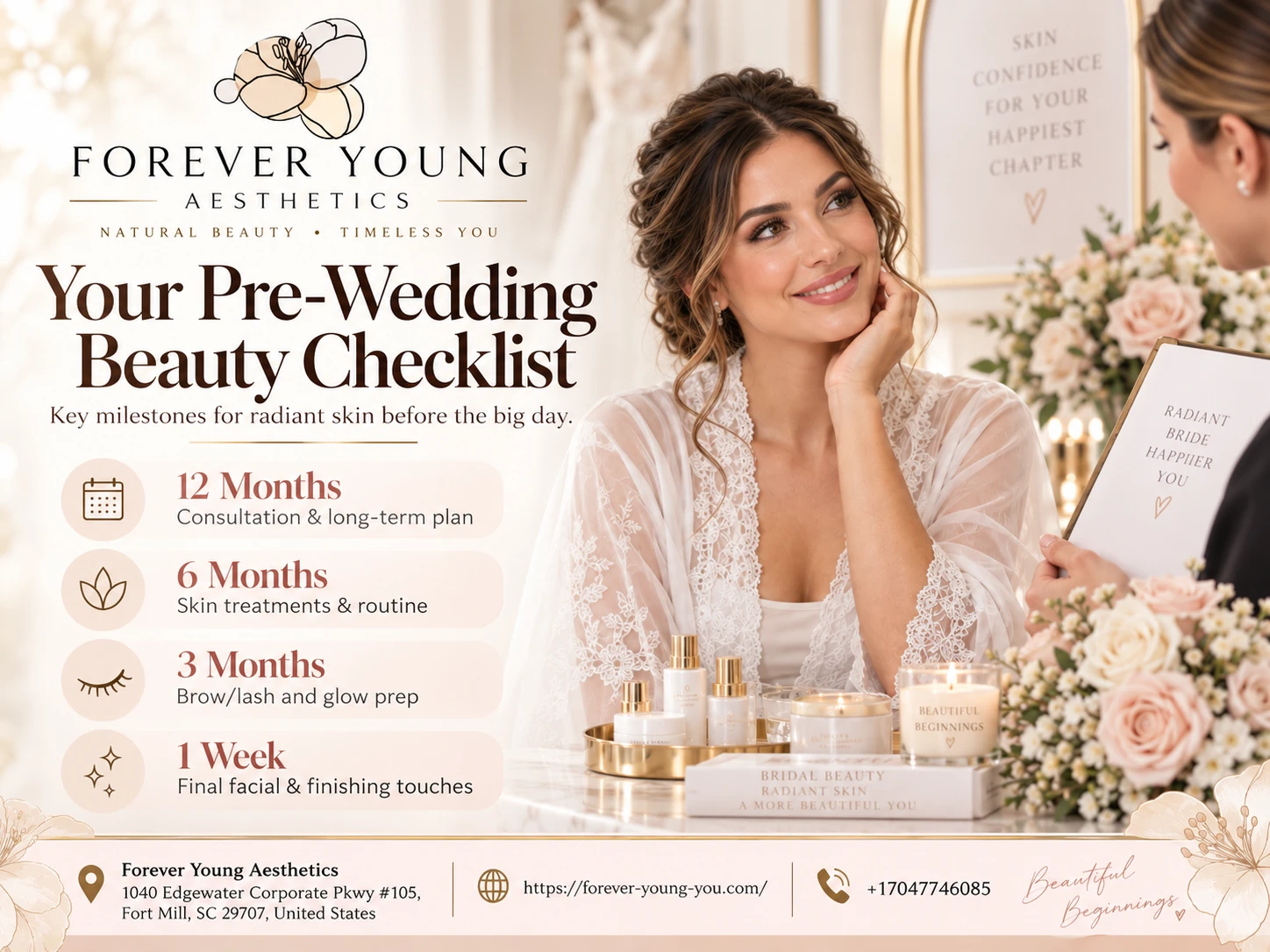
1 Month Before: Keep Your Routine Familiar
One month before your wedding, your beauty routine should feel predictable.
This is generally the time to continue doing what has already proven effective rather than making dramatic changes.
Stick with familiar:
- Cleansers
- Moisturizers
- Sunscreen
- Professional treatments
- Skincare products
If your provider has given you a specific pre-wedding plan, follow that guidance carefully.
Avoid assuming that a stronger treatment will automatically create a better result because the wedding is approaching.
Even procedures you have tolerated well before may produce temporary redness, swelling, tenderness, or other reactions. Planning conservatively gives your skin more room to settle.
1 to 2 Weeks Before: What Should You Avoid Changing?
The final couple of weeks are generally a poor time for experimentation.
Avoid introducing multiple new products, aggressive treatments, or unfamiliar procedures unless your medical or aesthetic provider specifically recommends them.
This period is about minimizing surprises.
Be especially cautious with anything that has previously caused:
- Irritation
- Peeling
- Significant redness
- Breakouts
- Swelling
- Prolonged sensitivity
Cosmetic injectable treatments can also produce temporary side effects. For example, FDA information on dermal fillers identifies swelling, bruising, pain, tenderness, redness, and other injection-site reactions among common risks.
If you already receive injectables regularly, work with your provider to determine appropriate timing rather than scheduling them casually right before your wedding.
Wedding Week: Keep Your Beauty Routine Simple
Wedding week is not the time to overhaul your face or skincare routine.
Keep things familiar.
Follow your usual skincare routine, stay consistent with products you already tolerate, and follow any instructions provided by your aesthetic professional.
The goal is not to squeeze in every possible treatment before the ceremony.
Instead, focus on maintaining the progress you have already made.
If you have an unexpected skin concern during wedding week, resist the urge to treat it aggressively on your own. Contact your skincare or medical provider if you need guidance.
A calm, familiar routine is generally easier to manage than introducing new variables during an already busy week.
How Should You Plan Treatments for Other Wedding Events?
Your wedding may be the main date on the calendar, but it probably is not the only event where you want your skin to feel its best.
Consider working backward from:
- Engagement photos
- Bridal showers
- Bachelor or bachelorette events
- Rehearsal dinners
- Dress fittings
- Destination travel
- Welcome parties
If you already know how your skin reacts to a particular treatment, your provider can help you schedule it appropriately before those events.
This can also serve as useful information before the wedding itself.
For example, if you discover that a familiar facial leaves you slightly pink for a day or two, you can use that experience to plan later appointments with more confidence.
The key is not to copy someone else’s timeline exactly.
Your recovery pattern matters more than another person’s schedule.
How to Create a Personalized Wedding Beauty Plan
A useful wedding beauty plan should answer three questions:
What do you want to address?
Start with your actual priorities rather than choosing treatments because they are popular.
How much time do you have?
Someone planning 12 months ahead has more flexibility than someone starting six weeks before the wedding.
How does your skin respond?
Your treatment history, sensitivity, skin type, medical background, and recovery pattern all influence timing.
A professional consultation can help turn those answers into a realistic plan.
When discussing cosmetic procedures, ask your provider about expected results, preparation, aftercare, risks, alternatives, and how much recovery time you should allow. The AAD specifically recommends asking questions about preparation and post-treatment skincare before cosmetic procedures.
Your timeline should also remain flexible. Skin changes, schedules change, and you may decide certain treatments are no longer important to you.
What Fort Mill Brides Should Know About Pre-Wedding Treatments
If you are planning your wedding in Fort Mill, beginning your skincare and aesthetic planning early can make the months leading up to the event feel much more manageable.
You do not need a complicated treatment schedule.
What matters is giving yourself enough time to understand your skin and make informed decisions.
At Forever Young Aesthetic, we encourage clients to think of pre-wedding treatments as optional tools rather than requirements. Some clients may want professional skincare alone. Others may already be interested in treatments such as botulinum toxin or dermal filler.
If injectables are part of your plan, professional assessment is particularly important. Dermal fillers are medical procedures, and FDA guidance emphasizes choosing an appropriately licensed healthcare provider and discussing treatment risks and options beforehand.
Starting early allows your plan to be gradual, personalized, and focused on treatments you understand rather than last-minute experimentation.
Your wedding beauty timeline should ultimately help you feel prepared, not pressured.
FAQs
Is 12 months too early to start planning wedding skincare?
No. Starting about a year in advance gives you plenty of time to establish a routine, evaluate professional treatments, and make adjustments. You do not need to undergo treatments continuously for the entire year.
When should I start professional facials before my wedding?
If professional facials are part of your plan, starting several months ahead allows you to learn how your skin responds. Your provider can recommend timing and frequency based on your skin and treatment type.
When should I get Botox before my wedding?
Timing varies according to the specific botulinum toxin product, treatment area, previous experience, and individual response. Results develop gradually rather than immediately, so discuss your wedding date with your provider well in advance.
When should I get filler before my wedding?
Dermal filler can create visible changes quickly, but swelling, tenderness, redness, and bruising may temporarily affect the treated area. Planning well in advance is preferable to receiving unfamiliar filler immediately before the wedding.
Should I try a new facial the week before my wedding?
It is generally safer to stick with familiar treatments close to the wedding rather than experimenting with something your skin has never experienced.
Can I start a new skincare routine one month before my wedding?
You can make changes under professional guidance, but introducing several unfamiliar products at once can make it difficult to predict how your skin will respond. Earlier planning gives you more flexibility.
What if my wedding is less than 12 months away?
You can still create a useful plan. Focus on your highest priorities and avoid trying to compress a full year’s worth of treatments into a short period.
Should I plan treatments around engagement photos too?
Yes. Engagement photos, bridal showers, rehearsal dinners, and other important events can be incorporated into the same timeline. Work backward from each date and allow appropriate recovery time.
Are injectables necessary for a wedding beauty plan?
No. Injectables are entirely optional. A wedding beauty plan can consist solely of professional skincare, home skincare, or simply maintaining a routine that already works for you.
Why shouldn’t I experiment right before my wedding?
A new product or treatment can occasionally lead to irritation, redness, breakouts, swelling, or other reactions. Keeping your routine familiar reduces unnecessary uncertainty close to the event.
What should I do during wedding week?
Keep your skincare simple and familiar, follow your provider’s instructions, and avoid introducing new treatments or products unless specifically advised.
Is a consultation really necessary for wedding skincare?
A consultation can be especially valuable because it allows a professional to evaluate your skin, health history, goals, treatment experience, and timeline before recommending procedures.