
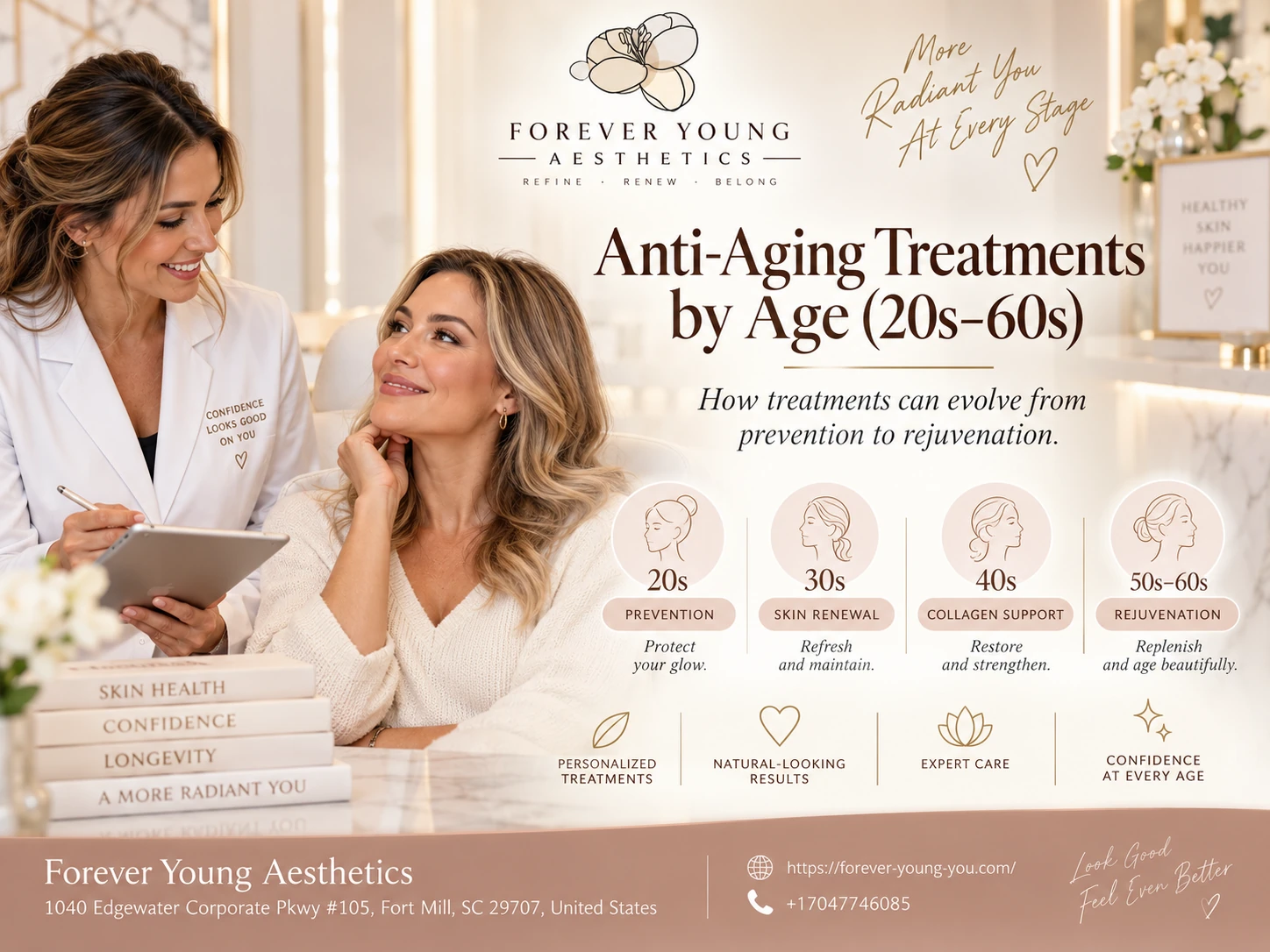
The right approach to anti-aging treatments by age changes as the skin changes, but age alone should never determine which treatment someone receives. People in their 20s may focus more on prevention and skin quality, while those in their 40s, 50s, and 60s may be more concerned with wrinkles, uneven texture, volume changes, pigmentation, or skin laxity.
Genetics, sun exposure, skincare habits, lifestyle, facial anatomy, and previous treatments also influence how the skin ages. For that reason, cosmetic treatments are generally most useful when selected according to a person’s specific concerns rather than simply following a treatment checklist for a particular birthday.
How Anti-Aging Needs Change With Age
Skin aging is gradual. There is no point at which everyone suddenly develops the same concerns.
Over time, however, people may notice changes involving:
- Fine lines and wrinkles
- Uneven pigmentation
- Sun spots
- Rougher texture
- Reduced skin firmness
- Facial volume changes
- Deeper folds or creases
- Increasing dryness
- Changes around the eyes, cheeks, jawline, or mouth
Sun exposure plays a significant role in visible skin aging. The American Academy of Dermatology recommends broad-spectrum sunscreen with an SPF of at least 30 as a foundational part of an anti-aging skincare routine.
Treatment priorities therefore tend to evolve rather than completely change from decade to decade.
Someone in their 20s may focus heavily on preventing unnecessary sun damage. By their 30s, early expression lines or texture changes may become more noticeable. During the 40s and beyond, concerns involving pigmentation, volume, wrinkles, and skin laxity can become more prominent.
These patterns are common, but they are not universal.
Anti-Aging Treatments in Your 20s
For many people in their 20s, the most useful anti-aging strategy is not an aggressive cosmetic procedure. It is protecting healthy skin and addressing specific concerns before unnecessary damage accumulates.
Common concerns during this decade can include:
- Acne
- Acne marks
- Uneven tone
- Early pigmentation
- Rough texture
- Early fine lines
- Sun exposure
- Dehydrated or irritated skin
Build a Consistent Skincare Foundation
Daily sunscreen is one of the most important steps. Moisturizer can also help support the skin barrier and temporarily soften the appearance of fine lines.
Depending on skin type and concerns, topical ingredients such as vitamin C or retinoids may also be considered. The American Academy of Dermatology notes that retinoids can be useful for mild fine lines, uneven pigmentation, acne, and texture concerns. Retinoids are not appropriate for everyone and should not be used during pregnancy.
Consider Skin Treatments Based on a Specific Concern
Someone dealing with acne marks, pigmentation, or uneven texture may discuss options such as:
- Chemical peels
- Microneedling
- Certain laser or light treatments
- Professional skincare treatments
The appropriate option depends on skin type, pigmentation, sensitivity, medical history, and the concern being treated.
What About Injectables in Your 20s?
Some adults in their 20s consider neuromodulator injections for expression lines. However, reaching a certain age does not automatically mean injections are necessary.
Treatment should be based on actual facial movement, anatomy, concerns, and individual preferences.
Preventive treatment should never mean treating areas simply because someone believes everyone should begin injections by a particular age.
Anti-Aging Treatments in Your 30s
The 30s are often when subtle changes become more noticeable.
Someone may begin seeing expression lines that remain visible for longer after smiling, squinting, or frowning. Skin tone may also become less even after years of cumulative sun exposure.
Common concerns include:
- Forehead lines
- Crow’s feet
- Frown lines
- Early pigmentation
- Uneven skin texture
- Mild changes in facial volume
- Early under-eye concerns
- Reduced skin brightness
Neuromodulators for Expression Lines
Neuromodulators such as FDA-approved botulinum toxin products may be used to temporarily improve the appearance of certain facial lines by reducing targeted muscle activity. These products are different from dermal fillers.
They may be considered for concerns involving areas such as:
- Forehead lines
- Frown lines
- Crow’s feet
The goal should be based on the patient’s desired appearance and facial anatomy rather than automatically attempting to eliminate all movement.
Treatments for Tone and Texture
For people more concerned with the skin itself, options may include:
- Chemical peels
- Microneedling
- Laser treatments
- Light-based treatments
- Professional skincare plans
These approaches may address concerns such as texture, pigmentation, sun damage, or fine lines depending on the technology or treatment selected.
A person who primarily has pigmentation concerns may need a very different plan from someone mainly bothered by expression lines.
Anti-Aging Treatments in Your 40s
During the 40s, several types of aging changes may begin occurring at the same time.
Common concerns can include:
- More visible fine lines and wrinkles
- Sun spots or uneven pigmentation
- Changes in cheek volume
- Lines around the mouth
- Under-eye changes
- Rougher texture
- Early skin laxity
- Less-defined facial contours
This is often when treatment planning becomes more comprehensive.
Addressing Wrinkles
Neuromodulators may still be considered for wrinkles associated with facial movement.
However, not every wrinkle is caused by muscle activity.
Lines that remain visible while the face is relaxed may involve changes in collagen, sun damage, skin quality, or facial structure. These concerns may require a different approach or a combination of treatments.
Addressing Volume Changes
Dermal fillers may be considered when facial volume or contour is a primary concern.
Fillers and neuromodulators serve different purposes. Fillers generally add or restore volume in specifically selected areas, while botulinum toxin products reduce activity in targeted muscles.
Dermal fillers are medical procedures and have potential risks. The FDA notes that uncommon but serious complications can occur if filler accidentally enters a blood vessel, including tissue damage, visual abnormalities, blindness, or stroke. Treatment should therefore be performed by an appropriately trained and licensed healthcare professional.
Improving Skin Quality
Someone in their 40s may also consider treatments targeting:
- Pigmentation
- Fine lines
- Sun damage
- Texture
- Acne scarring
Chemical peels, laser treatments, light-based procedures, microneedling, and other skin-focused treatments may be possibilities depending on the individual’s goals and skin characteristics.
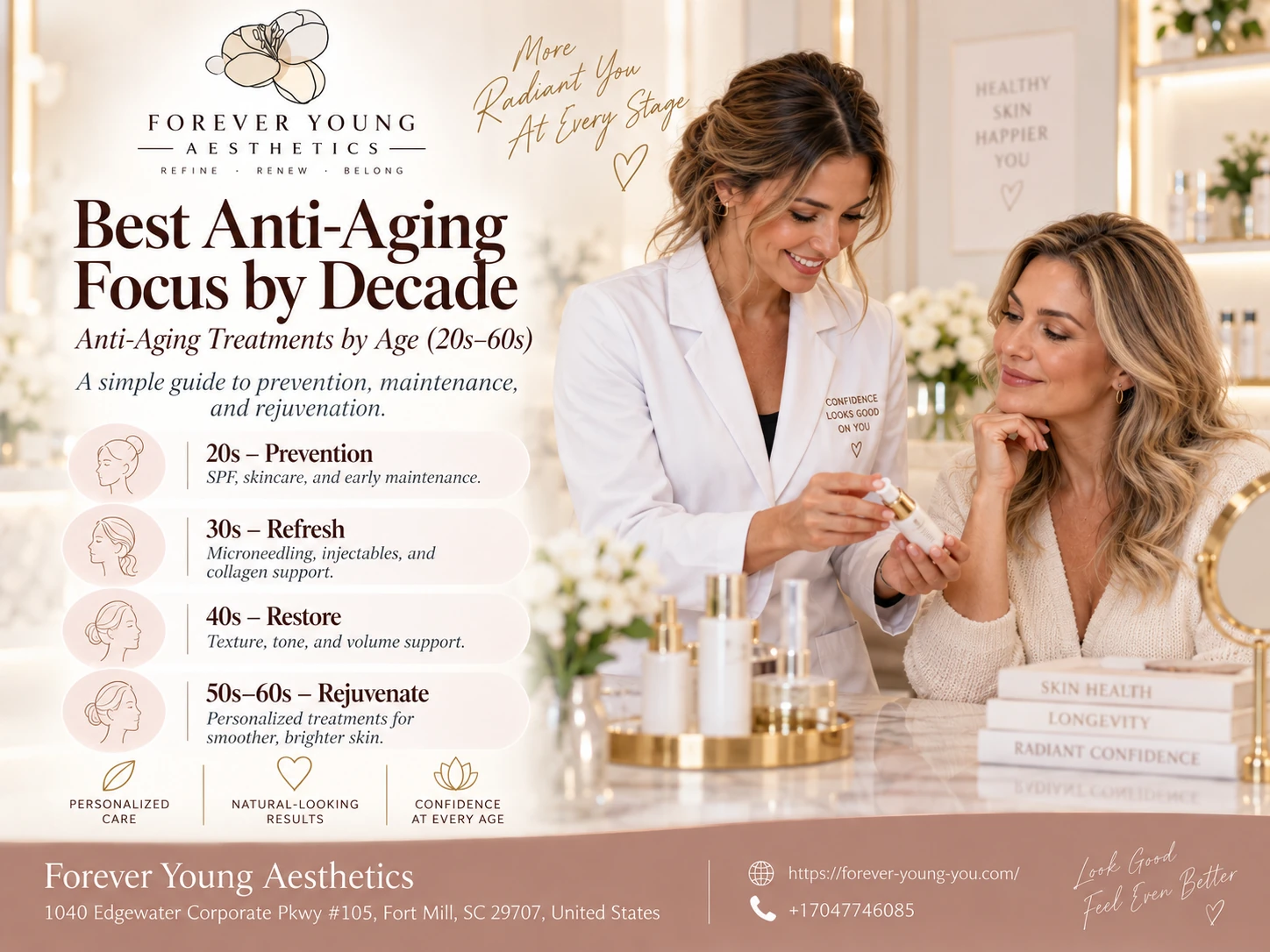
Anti-Aging Treatments in Your 50s
By the 50s, aging concerns may involve several layers of the face rather than only the skin’s surface.
People may notice:
- More established wrinkles
- Increased skin laxity
- Greater facial volume changes
- Less definition around the jawline
- More noticeable sun damage
- Uneven pigmentation
- Dryness
- Changes around the cheeks, mouth, and eyes
Hormonal changes can also influence skin characteristics during this stage of life.
Think Beyond Wrinkle Treatment Alone
Someone concerned about facial aging in their 50s may not benefit from concentrating on one wrinkle at a time.
A professional assessment may instead consider:
- Skin quality
- Facial movement
- Volume distribution
- Pigmentation
- Texture
- Degree of laxity
- Overall facial proportions
Depending on those findings, a treatment plan might discuss injectables, skin resurfacing, or energy-based procedures.
The American Academy of Dermatology lists options such as fillers, laser treatments, ultrasound, and non-invasive radiofrequency among treatments that may be used for selected signs of sun-damaged or aging skin.
Not every treatment is appropriate for every person, and nonsurgical procedures have limitations.
Anti-Aging Treatments in Your 60s
Anti-aging treatment in the 60s should not simply mean doing more of everything.
Skin may be thinner, drier, or more sensitive, and concerns may include a combination of:
- Skin laxity
- Deeper wrinkles
- Facial volume changes
- Sun spots
- Uneven tone
- Rough texture
- Changes around the neck and jawline
- Increased dryness
At this stage, realistic expectations become particularly important.
Prioritize the Concerns That Matter Most
A person may be more interested in improving skin texture than changing facial volume. Another may primarily want to soften certain facial lines.
Treatment should reflect those priorities.
Possible discussions may include:
- Neuromodulators for selected movement-related wrinkles
- Dermal fillers for appropriate volume concerns
- Chemical peels for selected surface concerns
- Laser or light-based treatments
- Radiofrequency or ultrasound-based treatments
- Professional skincare
- Moisturizing and sun-protection strategies
Chemical peels, for example, may improve selected concerns involving fine lines, pigmentation, roughness, and sun-damaged skin, but they do not significantly tighten loose or sagging skin.
Understanding these limitations helps patients form realistic expectations.
Injectables vs Skin Treatments for Aging Concerns
Injectables and skin treatments are sometimes discussed together, but they generally address different aspects of facial aging.
Neuromodulators
Botulinum toxin-based treatments primarily target muscle activity associated with certain expression lines.
They may be used for concerns such as:
- Frown lines
- Forehead lines
- Crow’s feet
Dermal Fillers
Fillers are generally used to address particular volume or contour concerns.
Depending on the specific FDA-approved product and indication, fillers may be considered in areas where restoring or adding volume is appropriate.
Skin Treatments
Skin-focused procedures may be more appropriate when the main concern involves:
- Texture
- Pigmentation
- Sun damage
- Acne scarring
- Fine surface lines
- Overall skin quality
Options may include chemical peels, laser resurfacing, light treatments, microneedling, or other professionally administered procedures.
Skin rejuvenation may involve several different treatment methods because wrinkles, pigmentation, scars, texture, and loss of firmness do not all develop for the same reason.
Combination Treatment
Some people have more than one concern.
For example, someone could have expression lines as well as uneven pigmentation. Treating muscle movement alone would not necessarily address the pigmentation.
A personalized plan may therefore include different treatment types, but more treatment is not automatically better.
How to Choose Treatments Based on Your Skin Goals
Instead of asking, “What should I have done at my age?” it can be more useful to ask, “What specifically would I like to improve?”
Start by identifying the primary concern.
If Your Concern Is Fine Lines
The provider should determine whether the lines are primarily related to facial movement, skin quality, sun damage, or a combination of factors.
If Your Concern Is Volume Loss
A facial assessment can determine where changes have occurred and whether injectable treatment is appropriate.
If Your Concern Is Pigmentation
The cause of pigmentation should be evaluated before selecting treatment. Different types of discoloration can respond differently to skincare, chemical peels, lasers, or light-based procedures.
If Your Concern Is Texture
Options may include resurfacing treatments, peels, microneedling, or skincare depending on the type and severity of the texture concern.
If Your Concern Is Skin Laxity
Treatments aimed at wrinkles or pigmentation will not necessarily tighten loose skin.
A consultation can help determine whether a nonsurgical skin-tightening option is reasonable or whether the degree of laxity is beyond what a minimally invasive treatment can realistically address.
Why Personalized Treatment Plans Matter
Two people who are both 45 can have completely different skin.
One may have very little sun damage but noticeable expression lines. Another may have few wrinkles but significant pigmentation. A third may be primarily concerned with volume changes.
That is why age should provide context rather than dictate treatment.
A professional consultation can consider factors such as:
- Skin type
- Facial anatomy
- Medical history
- Current medications
- Previous cosmetic procedures
- Sun exposure
- Pigmentation concerns
- Sensitivity
- Treatment goals
- Comfort with downtime
- Expectations
It is also important to discuss risks and limitations.
The American Academy of Dermatology recommends focusing first on the specific aging concern a person wants to address rather than using numerous anti-aging products at once. It also emphasizes realistic expectations because no single product or procedure addresses every sign of aging.
At Forever Young Aesthetics, we believe cosmetic treatment planning should begin with your individual concerns rather than a predetermined list based on your age.
Whether your priority is prevention, fine lines, skin texture, pigmentation, volume, or another visible change, a professional consultation can help determine which options may be appropriate and which treatments may not be necessary.
FAQs
What age should you start anti-aging treatments?
There is no required age. Daily sun protection and appropriate skincare can begin early, while cosmetic procedures should generally be considered when a specific concern develops and treatment is appropriate for that individual.
Should you get Botox in your 20s?
Not everyone in their 20s needs or wants neuromodulator treatment. It may be appropriate for some adults with particular expression-line concerns, but treatment should be based on facial anatomy, goals, and professional assessment rather than age alone.
What anti-aging treatments are common in your 30s?
People in their 30s may consider treatments for expression lines, pigmentation, texture, acne scarring, or early skin changes. Options can include neuromodulators, chemical peels, microneedling, laser or light treatments, and professional skincare depending on the concern.
What treatments are commonly considered in your 40s?
Treatment priorities in the 40s may include wrinkles, pigmentation, texture, early volume changes, and skin laxity. Some people consider a combination of injectables and skin-focused treatments after professional evaluation.
What is the best anti-aging treatment after 50?
There is no single best treatment. Someone primarily concerned with pigmentation will need a different approach from someone concerned with facial volume, movement-related wrinkles, or skin laxity.
Can fillers tighten loose skin?
Fillers are primarily designed to add or restore volume in selected areas. They are not a substitute for every type of skin-tightening procedure and cannot correct all degrees of loose or sagging skin.
Are injectables better than laser or skin treatments?
Neither category is universally better. Injectables and skin treatments address different concerns. Neuromodulators can target certain movement-related lines, fillers can address selected volume concerns, and skin procedures may focus more on pigmentation, texture, scars, or surface aging.
Can you combine different anti-aging treatments?
In some cases, a professional may recommend more than one treatment because different concerns have different causes. The appropriate combination and timing depend on the individual’s skin, medical history, previous procedures, and treatment goals.
Is sunscreen still important after starting cosmetic treatments?
Yes. Sun protection remains important at every age. The American Academy of Dermatology recommends broad-spectrum SPF 30 or higher and notes that continued UV exposure can contribute to additional visible skin aging.
How do I know which anti-aging treatment is right for me?
Start with a professional consultation focused on what you actually want to improve. Your age can provide context, but your skin condition, facial anatomy, medical history, expectations, and specific concerns should guide treatment recommendations.