

The best fall skin treatments are typically those selected to address concerns that become more noticeable after summer, including uneven pigmentation, dryness, dullness, fine lines, and rough texture. Fall can also be a convenient season for treatments that require careful sun avoidance because daylight hours are shorter and many people spend less time in intense outdoor sun.
That does not mean every procedure should automatically be scheduled once summer ends. Skin type, recent sun exposure, current skincare products, medical history, and treatment goals all matter. A professional assessment can help determine which treatment is appropriate and how to protect the skin before and afterward.
Why Fall Is a Good Time for Skin Treatments
Fall is often considered a useful time to reassess the skin after months of stronger summer sun exposure.
Some cosmetic procedures make the skin temporarily more sensitive while it heals. Chemical peels and certain laser or resurfacing treatments, for example, require careful sun protection during recovery. The American Academy of Dermatology notes that sun protection is important before and after many cosmetic procedures and that failure to protect treated skin can increase the risk of unwanted side effects.
Fall may therefore provide a practical window for treatment because many people:
- Spend less time outdoors
- Experience less intense seasonal sunlight
- Have fewer beach or pool activities
- Find it easier to protect treated areas with clothing
- Want to address visible effects of summer sun exposure
- Have time to complete a treatment series before winter or holiday events
However, UV radiation does not disappear when temperatures drop.
Daily sun protection remains important throughout fall and winter. The AAD specifically recommends continuing sun protection even on cloudy or cold days.
Season alone should not determine whether someone is ready for a procedure. A recent tan, sunburn, active skin irritation, or certain medical conditions may affect treatment timing.
How Summer Sun Can Affect Your Skin
Summer often means more time outside, stronger sunlight, vacations, outdoor sports, and other activities that increase cumulative ultraviolet exposure.
UV exposure can contribute to photoaging, which is premature skin aging caused by sunlight.
Over time, sun damage may contribute to:
- Dark spots
- Uneven pigmentation
- Blotchy skin tone
- Fine lines
- Wrinkles
- Rough or dry texture
- Loss of firmness
- Changes in overall skin appearance
The effects are cumulative. Damage that occurs over several summers can gradually become more visible rather than appearing immediately after one afternoon outside.
The AAD identifies wrinkles, age spots, blotchy complexion, and loose skin among the visible changes associated with accumulated sun damage.
What About a Tan?
A tan is not evidence that the skin has become healthier or stronger.
It develops in response to UV exposure. For certain procedures, having a recent tan or sunburn can also affect treatment safety.
Before laser treatment, for example, dermatologists may advise patients to avoid tanning and significant sun exposure. The AAD notes that treating recently tanned or sunburned skin with a laser may increase the risk of burns or discoloration.
This is one reason a consultation is important before beginning an aggressive fall treatment immediately after summer.
Best Fall Treatments for Uneven Skin Tone
Uneven skin tone is a common post-summer concern.
Someone may notice freckles becoming darker, existing pigmentation looking more prominent, or new areas of discoloration appearing after months of sun exposure.
Treatment options depend heavily on what is causing the discoloration.
Possible professional options may include:
- Chemical peels
- Intense pulsed light treatments
- Certain laser treatments
- Professional skincare
- Topical products recommended for pigmentation
- Other resurfacing procedures
The AAD lists chemical peels, laser resurfacing, intense pulsed light, and certain topical treatments among approaches dermatologists may use for age spots or blotchy pigmentation related to sun damage.
Not Every Dark Spot Should Be Treated Cosmetically
Pigmentation should be evaluated before treatment, especially when a spot is new, changing, irregular, bleeding, itching, or otherwise unusual.
Cosmetic treatment should not be used as a substitute for evaluating a potentially concerning skin lesion.
Different types of pigmentation can also react differently to treatment.
For example, treating melasma is different from treating isolated sun spots. Skin tone can also influence the risk of post-inflammatory hyperpigmentation following certain procedures.
This makes correct diagnosis and treatment selection more important than simply choosing the strongest available procedure.
Chemical Peels for Fall Skin Renewal
Chemical peels are frequently discussed during fall because they can address several concerns that become noticeable after summer.
Depending on the type and depth of the peel, they may be used for concerns including:
- Uneven skin tone
- Dullness
- Fine lines
- Rough texture
- Certain types of pigmentation
- Some forms of acne
- Sun-damaged appearance
The AAD identifies uneven pigmentation, dull complexion, fine lines, rough-feeling skin, age spots, and sun-damaged skin among concerns dermatologists may treat with chemical peels.
Not All Chemical Peels Are the Same
Chemical peels range from relatively superficial treatments to deeper procedures.
That difference affects:
- Recovery time
- Peeling
- Redness
- Aftercare
- Potential risks
- Sun restrictions
A lighter peel may involve several days of redness or scaling. Medium-depth peels can require substantially more healing time, while deep peels involve considerably greater downtime and medical supervision.
The AAD notes that after a medium peel, complete sun avoidance is recommended until the skin heals. Deep peels require even longer periods of strict sun avoidance.
Avoid Aggressive At-Home Peels
Professional-strength chemical exfoliation should not be treated like ordinary skincare.
The AAD currently notes an FDA warning about serious injuries associated with some chemical peel products sold for at-home use and recommends professional supervision for chemical peels.
A professional can assess the appropriate strength based on skin type, pigmentation, sensitivity, previous treatments, and desired level of downtime.
Treatments for Dry and Dull Skin
Fall itself can create another concern: dryness.
Cooler outdoor temperatures combined with lower humidity and indoor heating may leave some people’s skin feeling:
- Tight
- Rough
- Flaky
- Dull
- Dehydrated
- More sensitive than usual
Not every person experiencing dull fall skin needs an aggressive procedure.
Sometimes the better starting point is restoring hydration and supporting the skin barrier.
Professional Skincare Treatments
Depending on the skin’s condition, professionally selected treatments may focus on:
- Gentle exfoliation
- Hydration
- Removing accumulated surface cells
- Supporting smoother texture
- Improving the appearance of dull skin
Review Your Home Skincare Routine
A summer skincare routine may need adjustments when temperatures change.
Fall may be a good time to evaluate:
- Cleanser strength
- Moisturizer
- Exfoliating products
- Retinoids
- Acids
- Hydrating products
- Daily sunscreen
Using several exfoliating products simultaneously can irritate already-dry skin.
Adding stronger products simply because the skin looks dull can sometimes worsen irritation rather than improve it.
A professional assessment can help distinguish true dryness from other issues, including irritation from over-exfoliation.
Options for Fine Lines and Texture
Fine lines and uneven texture have multiple causes, so they do not all respond to the same treatment.
Possible options may include:
Microneedling
Microneedling creates controlled micro-injuries in the skin and may be considered for selected texture, scarring, and fine-line concerns.
Treatment suitability depends on factors such as skin condition, medical history, active breakouts, and treatment goals.
Chemical Peels
Peels may improve the appearance of certain fine lines and rough texture while also addressing pigmentation concerns.
The appropriate peel depth should be determined professionally.
Laser Resurfacing
Certain laser treatments can be used for wrinkles, scars, blemishes, pigmentation, or texture concerns.
Recovery varies considerably depending on the technology and treatment intensity.
After laser resurfacing, treated skin can be red, swollen, sensitive, or peeling. Sun protection is particularly important during healing and afterward.
Professional Skincare
Not every fine line requires a procedure.
Moisturizers can temporarily improve the appearance of dryness-related lines, while professionally recommended topical products may play a role in longer-term skincare plans.
Injectables
Some lines are caused primarily by repeated muscle movement rather than surface texture.
Neuromodulator injections may be considered for selected movement-related wrinkles, while dermal fillers serve different purposes involving volume and contour.
Neither should automatically be considered the solution for every fine line.
Treatment should match the cause of the concern.
How to Prepare Your Skin for Cooler Weather
Fall skincare does not have to become complicated.
A few consistent habits can make the seasonal transition easier.
Continue Wearing Sunscreen
Do not stop using sunscreen because summer is over.
UV exposure remains possible throughout the year, and sun protection becomes especially important around procedures that make the skin temporarily more vulnerable.
Prioritize Moisture
If skin begins feeling dry or tight, a more supportive moisturizer may help maintain the skin barrier.
The appropriate formulation depends on whether your skin is naturally dry, oily, acne-prone, sensitive, or combination.
Avoid Over-Exfoliating
Using scrubs, acids, retinoids, peels, and exfoliating cleansers simultaneously may produce more irritation than improvement.
Introduce active products thoughtfully.
Follow Pre-Treatment Instructions
Certain treatments may require temporary changes to skincare products or sun exposure.
For example, providers may ask patients to pause specific exfoliating products, retinoids, or other active ingredients before selected procedures.
Follow the instructions provided for your particular treatment rather than using a generic preparation routine.
Plan Around Recovery
Consider upcoming travel, outdoor activities, weddings, photographs, and other events before scheduling a procedure with downtime.
Some treatments produce minimal visible changes afterward. Others may cause several days or longer of redness, peeling, swelling, or sensitivity.
Knowing what to expect helps make treatment timing more practical.
How to Choose the Right Fall Skin Treatment
Start with the concern rather than the procedure.
Instead of deciding, “I want a chemical peel because it is fall,” ask what you actually want to improve.
For example:
Uneven pigmentation: A professional may assess whether topical skincare, peels, IPL, laser treatment, or another approach is appropriate.
Dryness: Hydration and barrier support may be more appropriate than aggressive resurfacing.
Fine lines: The provider should determine whether they relate primarily to movement, sun damage, dryness, texture, or volume changes.
Rough texture: Options may include exfoliating treatments, microneedling, peels, laser procedures, or skincare depending on the cause.
Acne scarring: Treatment may require a different strategy based on whether scars are depressed, raised, pigmented, or accompanied by active acne.
Skin laxity: Procedures designed for pigmentation or surface texture may not meaningfully address loose skin.
The strongest or most expensive treatment is not automatically the best treatment.
Appropriate treatment depends on matching the procedure to the condition of the skin and the person’s expectations.
Why Professional Skin Assessments Matter
Two people can finish summer with completely different skin concerns.
One may have noticeable sun spots but otherwise smooth skin. Another may have persistent acne, sensitive skin, and no significant pigmentation. A third may primarily notice dryness and fine lines.
Giving all three people the same fall treatment would make little sense.
A professional skin assessment can consider:
- Skin type and tone
- Current pigmentation
- Recent sun exposure
- Existing irritation
- Acne
- Scarring
- Fine lines
- Texture
- Skin sensitivity
- Current skincare products
- Previous procedures
- Medications and medical history
- Desired downtime
- Personal treatment goals
It can also identify reasons to delay or modify a procedure.
For example, recent tanning may affect whether certain laser treatments should be performed. Skin tone may influence which laser settings or peel formulations are appropriate. A history of cold sores can also be relevant before some resurfacing procedures.
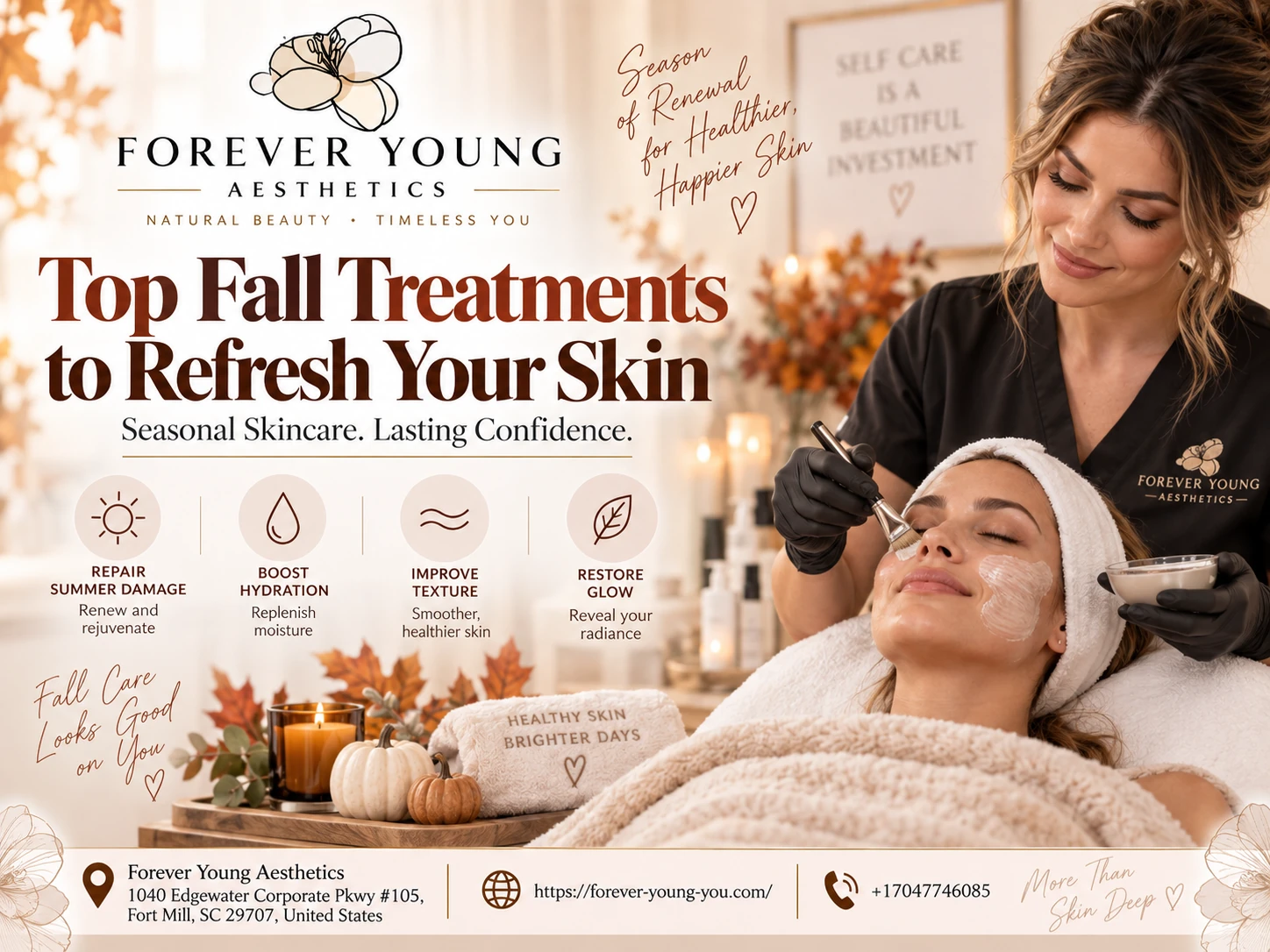
At Forever Young Aesthetics, fall treatment planning begins with understanding what has changed in your skin and what you would actually like to improve.
Seasonal timing can be useful, but personalized treatment selection, realistic expectations, appropriate aftercare, and consistent sun protection matter much more than simply choosing a treatment because it is popular during fall.
FAQs
What are the best skin treatments to get in fall?
There is no single best fall treatment. Common options may include chemical peels, microneedling, selected laser or light treatments, hydrating treatments, and professional skincare. The appropriate choice depends on whether the concern involves pigmentation, dryness, texture, fine lines, scarring, or another issue.
Why are chemical peels popular in the fall?
Chemical peels can temporarily make treated skin more sensitive and require careful aftercare and sun protection. Because many people experience less intense sun exposure during fall, the season may make recovery easier to manage. Sun protection is still required.
Can fall treatments remove summer sun damage?
Certain treatments can reduce the visible appearance of pigmentation, wrinkles, uneven tone, or texture associated with sun damage, but they cannot erase every effect of UV exposure. Continued sun protection remains important after treatment.
Is laser treatment better in fall?
Fall can be a convenient time for selected laser procedures because reducing sun exposure before and after treatment may be easier. However, treatment timing depends on the specific laser, skin tone, recent tanning, medical history, and condition being treated.
Can I get a laser treatment if I still have a summer tan?
A recent tan may make certain laser treatments inappropriate because it can increase the risk of burns or pigmentation changes. The AAD advises avoiding sun and tanning before laser treatment and notes that a provider may not be able to treat tanned or sunburned skin.
What treatment is best for dull fall skin?
Dull skin can result from dryness, accumulated dead skin cells, irritation, or other factors. Depending on the cause, professional exfoliation, hydration-focused treatments, chemical peels, or adjustments to home skincare may be considered.
What is best for uneven skin tone after summer?
Treatment depends on the type and cause of pigmentation. Options may include professional skincare, chemical peels, IPL, or certain laser treatments. Pigmented lesions should be properly evaluated before cosmetic treatment.
Should I stop wearing sunscreen in fall?
No. Sun protection is important throughout the year, including during cloudy and cold weather. It is especially important before and after procedures that temporarily increase skin sensitivity.
How soon before an event should I schedule a fall skin treatment?
It depends on the procedure. Some treatments have little downtime, while deeper peels and resurfacing procedures can cause redness, peeling, swelling, or sensitivity for days or longer. Discuss your upcoming events with your provider before scheduling treatment.
How do I know which fall treatment is right for my skin?
A professional assessment is the best starting point. Your provider can evaluate your skin type, pigmentation, texture, sensitivity, recent sun exposure, existing skincare routine, medical history, and treatment goals before recommending an appropriate option.