
Vitamin C can be a useful part of a skincare routine, but it may be too irritating immediately after a chemical peel. Freshly treated skin is often more sensitive, dry, or reactive, so strong active ingredients may need to be paused until the skin barrier has recovered.
The right time to restart vitamin C depends on the type and depth of peel, your skin sensitivity, the vitamin C formula you use, and your provider’s aftercare instructions. Rather than following a fixed number of days, focus on how your skin is healing and when it is ready to tolerate active skincare again.
Can You Use Vitamin C After a Chemical Peel?
Vitamin C is not usually the first product to reintroduce immediately after a chemical peel.
Chemical peels intentionally exfoliate layers of the skin using acids or other chemical solutions. Depending on the treatment, this can temporarily leave the skin more vulnerable to:
- Redness
- Dryness
- Peeling
- Tightness
- Stinging
- Increased sensitivity
- Sun sensitivity
Applying an active vitamin C serum too early may worsen some of these symptoms.
For that reason, many providers recommend keeping the skincare routine simple during early recovery and waiting until the skin has sufficiently healed before restarting vitamin C.
The timing should depend on your specific treatment rather than a universal rule.
Why Vitamin C May Irritate Freshly Treated Skin
Vitamin C is generally well tolerated when used appropriately, but some forms can be irritating even on untreated skin.
L-ascorbic acid, one of the most common forms of vitamin C, is usually formulated at a relatively low pH. That acidity can sometimes cause:
- Tingling
- Stinging
- Dryness
- Burning
- Redness
After a chemical peel, the skin barrier is temporarily disrupted.
Products that normally feel comfortable may suddenly sting or cause irritation because the skin is more sensitive during recovery.
Stronger vitamin C products may be particularly problematic when combined with other active ingredients.
For example, a serum that contains vitamin C along with exfoliating acids may be too aggressive for freshly treated skin.
This does not mean vitamin C is harmful after a chemical peel. It simply means the skin may need time to recover before it can tolerate the ingredient comfortably again.
When Is It Safe to Restart Vitamin C?
There is no single timeline that works for everyone.
Some people may be able to restart vitamin C relatively soon after a very superficial peel, while others may need a longer recovery period following a stronger treatment.
Your provider may recommend waiting until signs of active irritation have resolved.
These can include:
- Persistent redness
- Peeling
- Flaking
- Tightness
- Tenderness
- Burning
- Stinging when applying moisturizer
- Unusual sensitivity
If your skin still reacts to a basic moisturizer or cleanser, it is probably not the ideal time to introduce a stronger active ingredient.
The type of peel matters as well.
Recovery after a superficial peel can be very different from recovery after a medium-depth or more intensive treatment.
Always follow the aftercare instructions provided for your specific peel.
What Are the Benefits of Vitamin C After Recovery?
Once the skin has healed and your provider confirms that vitamin C can be restarted, the ingredient may provide several useful skincare benefits.
Antioxidant Support
Vitamin C helps protect the skin from oxidative stress caused by environmental factors such as ultraviolet exposure and pollution.
It should not replace sunscreen, but it can complement daily sun protection.
Brighter-Looking Skin
Vitamin C is commonly used to support a more even and radiant complexion.
This can make it useful for people concerned about dullness or uneven tone.
Support for Uneven Pigmentation
Vitamin C may help improve the appearance of certain areas of discoloration when used consistently as part of an appropriate skincare routine.
This benefit can be particularly relevant after the skin has completely recovered from a peel intended to improve uneven pigmentation.
Collagen Support
Vitamin C plays a role in normal collagen production.
Topical vitamin C is therefore commonly included in skincare routines focused on fine lines, texture, and overall skin quality.
Long-Term Skin Maintenance
Chemical peels provide periodic exfoliation, while vitamin C can become part of an ongoing daily or regular skincare routine once recovery is complete.
The two can work well together when appropriately timed.
Which Vitamin C Products May Be Too Strong After a Peel?
Not all vitamin C products are equally gentle.
Formulation matters.
Products may be more likely to cause irritation when they contain:
- High concentrations of L-ascorbic acid
- Multiple exfoliating acids
- Strong fragrances
- Alcohol-heavy formulas
- Retinoids
- Aggressive brightening ingredients
- Multiple potent actives in one product
Someone who normally tolerates a 15% or 20% vitamin C serum may still find it uncomfortable immediately after a peel.
Higher concentration does not automatically mean a better product, particularly during recovery.
Some vitamin C derivatives may feel gentler than pure L-ascorbic acid, although tolerability still varies by individual and formula.
Your provider can help determine whether your existing serum is appropriate to restart or whether a gentler option would make more sense.
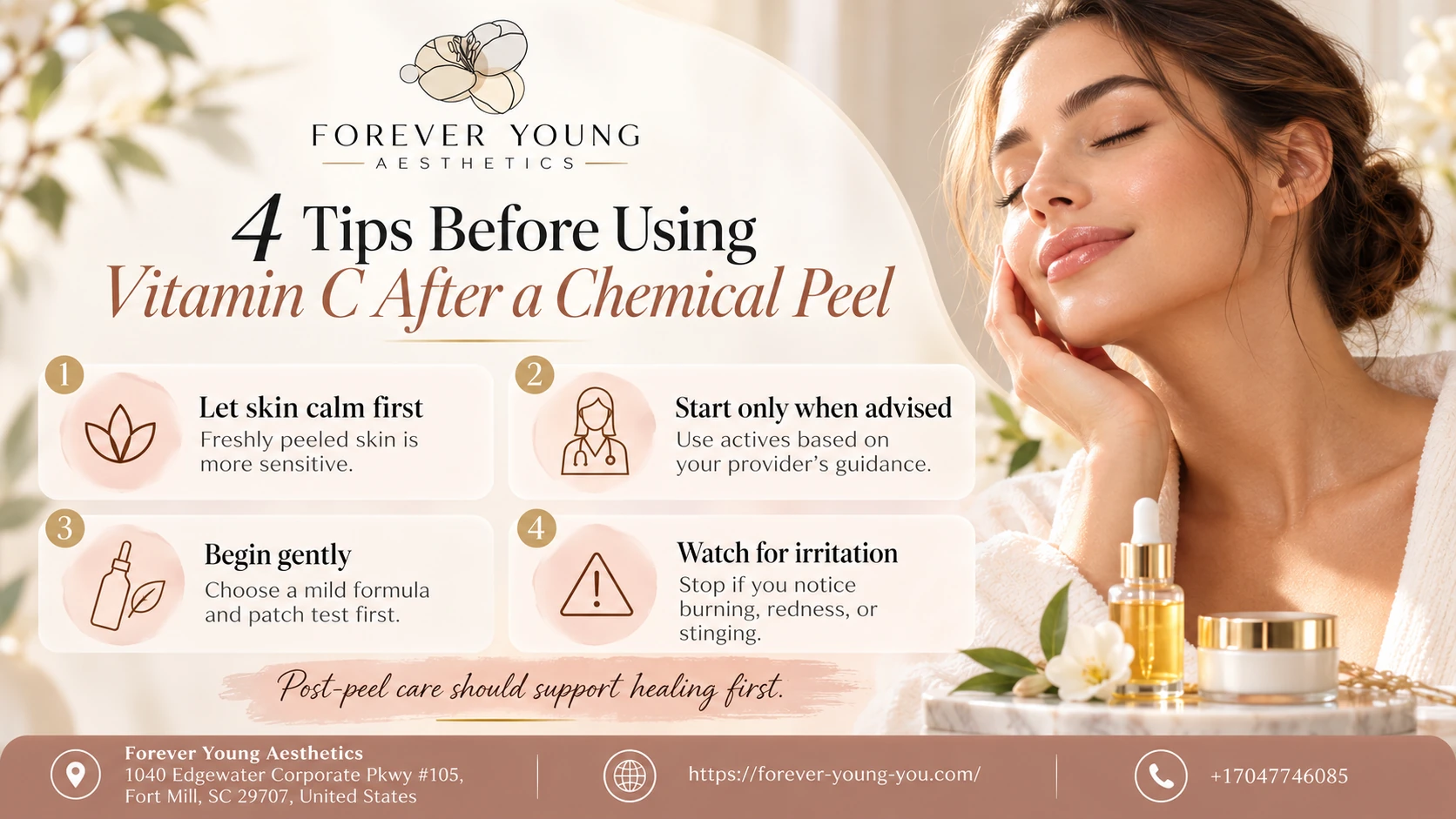
What Skincare Products Should You Use During Recovery?
A simple routine is usually best while the skin barrier is recovering.
Your provider may recommend temporarily focusing on products that hydrate and protect rather than aggressively treating the skin.
Gentle Cleanser
Choose a mild cleanser that removes dirt and oil without leaving the skin tight or dry.
Avoid scrubbing.
Basic Moisturizer
A fragrance-free moisturizer can help support the skin barrier and reduce discomfort from dryness or tightness.
Hydrating Products
Gentle hydrating products may be appropriate depending on the peel and your provider’s recommendations.
Look for formulas designed for sensitive or compromised skin.
Sunscreen
Sun protection is essential after a chemical peel.
The newly exfoliated skin may be more susceptible to sun damage and unwanted pigmentation.
Use a broad-spectrum sunscreen recommended by your provider and reapply as directed.
Your recovery routine does not need to contain many products.
More skincare is not always better when the skin is healing.
Ingredients to Avoid After a Chemical Peel
Vitamin C may only be one of several active ingredients that should be temporarily paused.
Your provider may recommend avoiding products containing:
- Retinol
- Prescription retinoids
- Glycolic acid
- Salicylic acid
- Lactic acid
- Strong exfoliating toners
- Physical scrubs
- Benzoyl peroxide
- Strong vitamin C formulas
- Enzyme exfoliants
- Harsh acne treatments
- Fragrance-heavy products
At-home peels and exfoliating tools should also generally be avoided until the skin has recovered.
Combining multiple active ingredients too soon can increase irritation.
Even if you normally use several active products together, your routine may need to be temporarily simplified after treatment.
How to Protect Your Skin While It Heals
Good aftercare extends beyond the products you apply.
Your daily habits can also affect how comfortably the skin recovers.
Avoid Picking Peeling Skin
Flaking or peeling may occur after some chemical peels.
Do not pull or pick at loose skin.
Allow it to shed naturally.
Picking can cause unnecessary irritation and may increase the risk of discoloration.
Limit Sun Exposure
Recently treated skin needs careful sun protection.
Seek shade where possible, wear sunscreen as recommended, and consider protective clothing or a hat when spending time outdoors.
Avoid Excessive Heat
Your provider may recommend temporarily avoiding:
- Saunas
- Steam rooms
- Hot tubs
- Very hot showers
- Intense exercise
Excess heat can sometimes worsen redness or sensitivity.
Avoid New Products
The recovery period is not a good time to experiment with unfamiliar serums or treatments.
Stick to products you have been specifically advised to use.
Keep the Skin Moisturized
Maintaining appropriate hydration can reduce dryness and support the recovery of the skin barrier.
Why Recovery Timelines Can Vary
Chemical peels vary significantly in strength.
So do individual skin responses.
Factors that may influence your recovery include:
Type of Peel
Different acids and formulations penetrate the skin differently.
Peel Depth
Superficial peels generally involve less recovery than stronger treatments.
Skin Sensitivity
People with sensitive or reactive skin may need more time before active ingredients feel comfortable again.
Vitamin C Formula
A low-strength derivative may be tolerated differently from a concentrated L-ascorbic acid serum.
Other Skincare Products
Using several exfoliating or active products may increase overall sensitivity.
Previous Treatments
Your skin’s response to previous chemical peels may help your provider plan future aftercare.
Existing Skin Concerns
Conditions associated with dryness, irritation, or sensitivity may affect the recommended recovery plan.
This variability is why a fixed statement such as “restart vitamin C after three days” may not be appropriate for everyone.
Your skin’s condition should guide the decision.
When to Ask Your Provider About Restarting Vitamin C
If you are unsure whether your skin is ready, ask your treatment provider before restarting your serum.
It is especially important to get guidance if:
- Your skin is still peeling
- Redness is lasting longer than expected
- Moisturizer causes stinging
- You have significant dryness
- Your skin feels unusually tender
- You experienced a stronger peel
- You use a high-concentration vitamin C serum
- Your vitamin C contains other active ingredients
- You developed unexpected discoloration
- You have a history of sensitive skin
Also contact your provider if you experience symptoms that seem more intense or prolonged than the recovery they described before treatment.
Do not try to manage significant irritation by adding more active skincare.
A professional can help determine whether the skin simply needs more recovery time or whether additional evaluation is appropriate.
Reintroduce Vitamin C When Your Skin Is Ready
Vitamin C can offer valuable long-term skincare benefits, but immediately after a chemical peel is not always the best time to use it.
During early recovery, the priority should be protecting the skin barrier, maintaining hydration, and minimizing unnecessary irritation. Once redness, peeling, sensitivity, and discomfort have resolved, your provider can help determine when it is appropriate to gradually restart vitamin C.
The ideal timeline depends on your individual skin, the type of peel performed, and the strength of your skincare products.
Following personalized aftercare rather than a generic schedule can help you get more from both your chemical peel and your everyday skincare routine.
FAQs
Can I use vitamin C the day after a chemical peel?
It may be too soon, depending on the type of peel and how your skin is responding. Freshly treated skin can be more sensitive to acidic or concentrated products. Follow your provider’s instructions and avoid restarting active ingredients until they advise that your skin is ready.
How many days should I wait before using vitamin C after a peel?
There is no universal number of days. A superficial peel may require less recovery than a stronger treatment. It is generally better to base the decision on your provider’s guidance and whether redness, peeling, tenderness, and sensitivity have resolved.
Why does vitamin C sting after a chemical peel?
The skin barrier can temporarily become more sensitive after exfoliation. Acidic vitamin C formulas, particularly L-ascorbic acid products, may therefore sting more than they normally would. Stop using the product if it causes significant irritation and ask your provider when to try it again.
Should I stop vitamin C before a chemical peel too?
Your provider may recommend temporarily pausing vitamin C or other active skincare products before treatment, particularly if your skin is sensitive or the formula is strong. Follow your specific pre-treatment instructions rather than assuming your normal routine should continue unchanged.
What should I use instead of vitamin C during recovery?
A gentle cleanser, simple moisturizer, appropriate hydration, and broad-spectrum sunscreen are commonly emphasized during early recovery. Use the products recommended by your provider because the appropriate routine may vary depending on the type and strength of your peel.
Can I use retinol and vitamin C after a chemical peel?
Both may need to be paused while the skin heals. Restarting several strong active ingredients at the same time can increase irritation. Your provider may recommend introducing products gradually once your skin has recovered.
Is vitamin C good for skin after a chemical peel?
Vitamin C can be beneficial once the skin has healed. Its antioxidant properties can support protection from environmental stress, while regular use may improve the appearance of dullness, uneven tone, and overall skin quality. The key is waiting until your skin can comfortably tolerate it.