
Wearing makeup after Botox may be possible relatively soon after treatment, but the most important thing is to avoid rubbing, pressing, or irritating the injection areas. Your provider may also give you specific instructions based on where you were treated and how your skin responds.
At Forever Young Aesthetics, we recommend following the aftercare instructions given at your appointment rather than assuming one timeline applies to everyone. A gentle approach during the first several hours can help protect the treated areas while redness, tenderness, or small injection marks settle.
Can You Wear Makeup After Botox?
Yes, many patients can wear makeup after Botox treatment.
Botox injections generally require little to no downtime, and most people can return to their usual daily routine shortly afterward. The American Academy of Dermatology notes that patients can apply makeup after leaving a botulinum toxin treatment appointment, provided they take care not to press or rub the treated areas.
That does not mean everyone should immediately reach for foundation, however.
If your skin is particularly red, tender, swollen, or irritated after treatment, your provider may recommend giving it some time before applying cosmetic products. The specific areas treated can also affect what is practical.
For example, applying foundation around forehead injection sites may require more contact with the skin than applying lipstick after treatment elsewhere.
The safest rule is simple: follow the instructions your injector gives you.
How Long Should You Wait Before Applying Makeup?
There is no single waiting period that applies to every patient.
Some people may be able to apply makeup shortly after Botox, while others may prefer or be advised to wait until their skin feels less sensitive.
The American Academy of Dermatology states that makeup can generally be applied after treatment as long as patients avoid pressing or rubbing the injected areas. Your own provider may recommend additional precautions based on the treatment performed.
Several factors can influence your personal instructions, including:
- The areas where Botox was injected
- How many injection points were used
- Whether the skin is red or irritated
- Whether there is minor swelling or bruising
- Other cosmetic treatments performed during the same visit
- Your provider’s individual aftercare protocol
If you received Botox alongside another treatment, such as a chemical peel, laser procedure, microneedling, or injectable treatment, your makeup instructions may be completely different.
Always follow the instructions for the most restrictive treatment you received.
Why Should You Avoid Rubbing the Treatment Area?
One of the most consistent Botox aftercare recommendations is to avoid rubbing or massaging the injection areas.
Both the American Academy of Dermatology and the American Society of Plastic Surgeons advise patients not to rub or massage treated areas following botulinum toxin injections.
This precaution is one reason makeup application deserves some extra attention.
Think about how makeup is normally applied. Foundation may be blended with a sponge. Concealer may be rubbed around the eyes. Powder may be buffed into the forehead using a brush.
Those techniques can involve more pressure than patients realize.
After Botox, the goal is not necessarily to avoid touching your face entirely. Instead, keep contact light and avoid deliberate rubbing, firm blending, facial massage, or repeated pressure over the injection sites.
What Type of Makeup Is Best After Botox?
If your provider has cleared you to wear makeup, uncomplicated products that are easy to apply gently are usually the most practical choice.
You may want to keep your routine simple for the rest of the day rather than layering several products that require extensive blending.
Consider using:
- Lightweight foundation or skin tint
- Concealer applied only where necessary
- Loose or lightly pressed powder
- Products that spread easily without repeated rubbing
- Clean makeup brushes or applicators
The FDA recommends washing your hands before using cosmetics and keeping makeup containers and applicators clean.
Clean tools are particularly sensible after an injectable appointment because the skin has recently been punctured with very small needles.
Avoid sharing makeup or applicators with anyone else.
If a particular product stings or irritates the treatment area, remove it gently and stop using it until your skin has settled.
How Should You Apply Makeup After Treatment?
Technique matters more than applying a long list of special products.
Use a light touch.
Instead of aggressively blending foundation into the skin, gently pat or sweep it over the area with minimal pressure.
A simple approach may look like this:
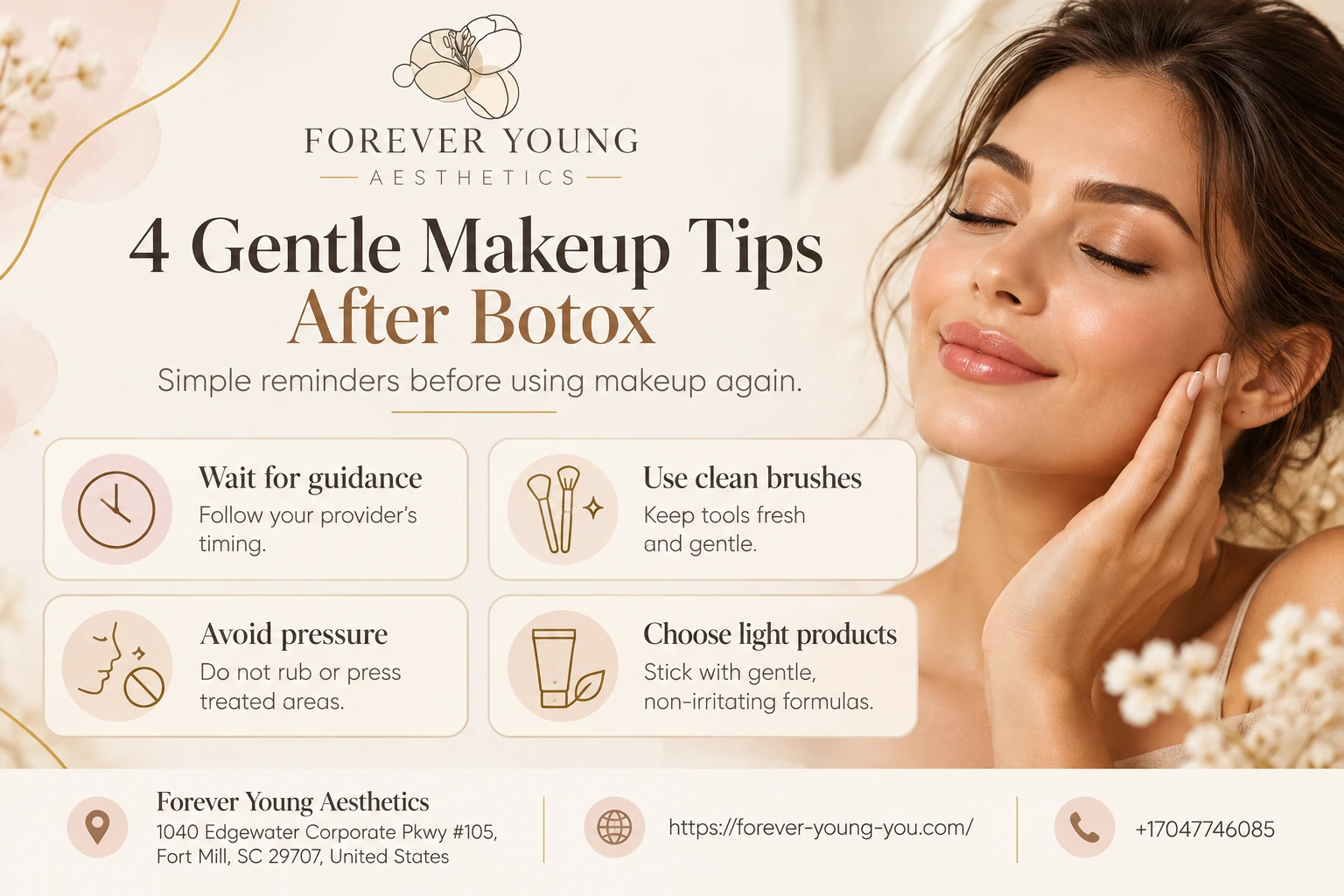
- Wash your hands thoroughly.
- Make sure your makeup tools are clean.
- Use only the products you actually need.
- Apply makeup with light tapping or gentle sweeping motions.
- Avoid pushing directly into injection points.
- Do not repeatedly buff or massage the treated areas.
- Stop if the skin becomes uncomfortable or increasingly irritated.
The American Academy of Dermatology describes gentle makeup application as a feather-light touch and recommends keeping makeup brushes clean.
You also do not need to cover every tiny injection mark immediately.
Minor redness often settles on its own. If your skin looks slightly pink after your appointment, giving it a little time may be easier than trying to completely conceal it.
Can You Wash Your Face After Botox?
Yes, washing your face is generally possible after Botox, but gentle cleansing is important.
Avoid vigorous scrubbing or facial massage.
When cleansing, use your fingertips rather than washcloths, cleansing brushes, or other tools that can create unnecessary friction. Lukewarm water and a mild cleanser are typically easier on recently treated skin.
The American Academy of Dermatology recommends gently washing the face with cleanser and patting the skin dry rather than aggressively rubbing it.
After Botox, the same principle is especially useful.
When drying your face, gently pat with a clean towel.
You may also want to simplify your skincare routine temporarily if your skin feels sensitive. Strong exfoliants, scrubs, or products that normally cause tingling or irritation may be uncomfortable immediately after injections.
Your provider can tell you when to resume your normal skincare products.
What Other Activities Should You Avoid After Botox?
Most people can resume many normal activities soon after Botox. However, there are several precautions your provider may recommend.
Rubbing or massaging your face
This is one of the most widely recommended precautions. Avoid facial massages and unnecessary pressure around treatment areas.
Strenuous exercise
Recommendations can vary.
The American Academy of Dermatology advises waiting at least two hours before strenuous physical activity such as heavy lifting or exercise that significantly increases your heart rate. Your injector may recommend a different timeframe based on your treatment.
Other facial treatments
Do not schedule treatments that involve significant pressure or manipulation of your face immediately after Botox unless your provider has specifically approved them.
That can include treatments such as:
- Facial massage
- Certain facials
- Aggressive exfoliation
- Treatments involving pressure against the forehead or face
If you already have another cosmetic appointment scheduled, tell both providers that you recently received Botox.
Heat, alcohol, and other activities
Providers may give individual instructions regarding alcohol, excessive heat, saunas, hot tubs, or other activities following treatment.
Rather than following a generic online checklist, use the instructions provided by the professional who performed your injections.
What Is Normal After Botox Treatment?
Minor temporary changes around injection sites can occur after Botox.
These can include:
- Small red spots
- Mild swelling
- Tenderness
- Minor bruising
- Temporary soreness
- A small bump at an injection point
- Mild headache in some patients
The American Academy of Dermatology lists redness, soreness, swelling, and bruising among possible temporary effects following botulinum toxin treatment.
The American Society of Plastic Surgeons similarly notes that bruising, pain at the injection site, redness, headache, and temporary facial weakness or drooping are possible side effects.
Small injection marks typically become less noticeable as the skin settles.
Botox results also are not necessarily immediate. The treatment works by temporarily reducing activity in targeted muscles, so visible changes develop as the medication begins taking effect.
Do not assume that the treatment has failed simply because you still see movement or lines shortly after your appointment.
Follow the timeframe discussed with your injector before judging your final result.
When Should You Contact Your Provider?
If something feels unusual or you are concerned about how you are healing, contact your provider.
It is always reasonable to ask questions after an injectable treatment, particularly if symptoms are increasing rather than improving.
Contact your provider if you notice unexpected or concerning symptoms such as:
- Significant or worsening swelling
- Increasing redness or pain
- Signs of infection
- An unusual rash
- Persistent or concerning facial weakness
- Eyelid or eyebrow drooping that concerns you
- Vision changes
- Any reaction that seems substantially different from what your provider told you to expect
Serious complications from botulinum toxin products are uncommon, but patients should know the warning signs.
The FDA notes that botulinum toxin products carry a boxed warning concerning the potential spread of toxin effects. Difficulty swallowing or breathing requires immediate medical attention.
Official Botox Cosmetic safety information also advises seeking medical attention for serious allergic reactions and other significant symptoms.
For routine concerns, start by contacting the practice that performed your treatment. They know which areas were treated, how much product was used, and what instructions apply to your particular procedure.
FAQs
Can I put foundation on after Botox?
Many patients can apply foundation after Botox, provided their provider has not instructed them otherwise. Apply it gently and avoid rubbing, pressing, or aggressively blending over injection sites. If your skin is irritated or particularly sensitive, waiting until it settles may be more comfortable.
Can I use a makeup sponge after Botox?
You may be able to, but use very light pressure. Avoid bouncing or pressing the sponge firmly against recently injected areas. A clean brush or very gentle fingertip application may also work, depending on what your provider recommends.
Can I remove makeup the same night after Botox?
Generally, makeup can be removed, but do it gently. Avoid vigorous scrubbing or massage. Use a mild cleanser or makeup remover and gently pat your face dry instead of rubbing it with a towel.
What if I accidentally rub my face after Botox?
A brief accidental touch does not automatically mean something will go wrong. Stop rubbing the area and follow the rest of your aftercare instructions. If you applied significant pressure or are worried about your treatment, contact your injector for personalized guidance.
Should I skip makeup completely on the day of Botox?
Not necessarily. Some patients wear makeup afterward without difficulty. Others choose to give their skin the rest of the day without cosmetics, particularly if they have redness or sensitivity. Follow the advice given by your provider.
How do I know when my normal skincare and makeup routine is safe again?
Your injector can give you the most appropriate timeline based on the treatment areas and any additional procedures performed. In general, the important early precaution is avoiding irritation, rubbing, massage, and unnecessary pressure.
Have Questions About Botox Aftercare?
Botox usually requires minimal interruption to your daily routine, but good aftercare still matters. Makeup, cleansing, exercise, skincare, and other everyday activities may need small adjustments immediately after your appointment.
At Forever Young Aesthetics, we want patients to understand both the treatment itself and what to expect afterward. Before you leave your appointment, make sure you understand your individual aftercare instructions, including when you can apply makeup, wash your face, exercise, and resume other skincare or aesthetic treatments.
If you have already received Botox with us and are unsure whether something you are experiencing is normal, contact our team rather than relying solely on general online advice. We can review your treatment and provide guidance based on the areas treated and your individual circumstances.
Following those personalized instructions and treating your skin gently can make the first hours after Botox much easier to manage.