

Flying after dermal fillers may be possible relatively soon after treatment, but there is no single waiting period that is right for every patient. The best timing depends on the filler used, the area treated, how much swelling or bruising develops, your health, and the aftercare instructions provided by your injector.
For many patients, the biggest travel concern is not that flying will physically move the filler. It is that normal post-treatment swelling, tenderness, or bruising could make a flight uncomfortable, and being away from your injector could make it harder to have an unexpected reaction evaluated promptly.
At Forever Young Aesthetics, we recommend discussing upcoming travel before your filler appointment whenever possible. That gives your injector an opportunity to help you plan treatment around your trip and provide aftercare guidance based on your specific procedure.
Can You Fly After Dermal Fillers?
In many cases, yes.
Dermal fillers are minimally invasive treatments, and the American Society of Plastic Surgeons notes that most normal activities can generally be resumed soon after treatment. However, temporary swelling, redness, tenderness, and bruising are common during early recovery.
Because of these normal side effects, being medically able to board an airplane and choosing the most comfortable time to travel are not necessarily the same thing.
Someone with minimal swelling following a small amount of filler may have a very different travel experience from someone who has significant swelling after lip or facial filler.
Your injector may also want you to remain nearby for a period after treatment so that any unusual symptoms can be assessed quickly.
If you know you have a flight coming up, mention it before your injections rather than waiting until treatment is finished.
How Long Should You Wait Before Flying?
There is no universal number of hours or days that every patient needs to wait before flying.
Recommendations can vary depending on:
- The area treated
- The type of dermal filler used
- How much filler was injected
- Your previous reaction to fillers
- The amount of swelling or bruising present
- Whether you received other cosmetic treatments at the same appointment
- The length and destination of your flight
- Your injector’s individual aftercare protocol
The American Society of Plastic Surgeons emphasizes that recovery varies between patients and filler types and recommends discussing an individual recovery plan with the treating professional.
If your trip is flexible, allowing some recovery time before an important flight can be helpful simply because swelling and bruising may be most noticeable during the early period following treatment.
This can be particularly useful if you are traveling for a wedding, business event, vacation photos, or another occasion where you want your filler to look settled.
Your injector can help you choose an appropriate treatment date based on your travel schedule.
Can Flying Increase Swelling After Fillers?
Dermal fillers themselves commonly cause temporary swelling after injection. The FDA lists swelling, bruising, redness, tenderness, and pain among the known side effects of filler treatment, and many of these effects appear shortly after injection.
Whether flying noticeably increases facial swelling after filler varies from person to person.
Long flights involve extended periods of sitting, changes in routine, dry cabin conditions, salty airport or airline foods, disrupted sleep, and other factors that can affect how comfortable you feel while traveling.
However, it is important not to assume that every increase in swelling is simply caused by the flight.
If swelling becomes severe, unusually painful, discolored, one-sided, or progressively worse, contact your injector rather than dismissing it as a normal consequence of flying.
Before leaving for the airport, take a look at your treatment areas and make sure your recovery appears consistent with what your injector told you to expect.
Does Cabin Pressure Affect Dermal Fillers?
Commercial aircraft cabins operate at a lower atmospheric pressure than sea level. The CDC notes that cabins are typically pressurized to conditions equivalent to approximately 6,000 to 8,000 feet above sea level.
Pressure changes can affect air-filled spaces in the body, which is why travelers may experience ear or sinus discomfort during takeoff and landing.
Dermal filler, however, is not an air-filled space.
Current FDA and American Society of Plastic Surgeons filler safety guidance focuses on issues such as swelling, bruising, tenderness, infection, nodules, allergic reactions, and rare vascular complications rather than routine aircraft cabin pressure physically expanding or moving filler.
There is limited clinical research specifically examining recently injected cosmetic filler during commercial flights, so patients should still follow their injector’s recommendations.
The practical concern is generally how you are healing and whether you would be comfortable dealing with swelling or another problem while traveling.
What Are the Risks of Flying Too Soon After Treatment?
For most patients, the concern is less about the airplane itself and more about traveling during the early recovery period.
Potential problems include:
Increased discomfort
Recently treated areas may feel tender or swollen. A long day involving airport security, carrying luggage, disrupted sleep, and hours on a plane can make the recovery period less comfortable.
Visible bruising or swelling
You may still look swollen or bruised when you arrive at your destination.
The American Society of Plastic Surgeons notes that initial filler recovery can include swelling, bruising, temporary redness, numbness, an overfilled appearance, or palpable areas around injection sites.
If appearance is important for your trip, schedule treatment with enough flexibility for these effects to improve.
Limited access to your injector
This is one of the more important considerations.
Although severe filler complications are uncommon, accidental injection into a blood vessel can cause serious tissue or vision complications and requires urgent medical assessment.
Being thousands of miles from the clinician who treated you may make evaluating an unexpected symptom more complicated.
Difficulty monitoring changes
When you are rushing through an airport or adjusting to a new destination, it may be more difficult to pay attention to subtle changes in the treated area.
Scheduling some recovery time before travel can make monitoring your results easier.
How to Reduce Swelling and Discomfort While Traveling
If your injector has cleared you to fly, a few simple habits can make travel more comfortable.
Follow your specific aftercare instructions
The recommendations given by your injector should take priority over general advice online.
Different filler products, treatment areas, and patients may require slightly different precautions.
Keep your routine simple
Avoid experimenting with new skincare products or treatments immediately after fillers.
Your skin has recently been injected, so this is not the ideal time for aggressive exfoliation, facial massage, or other unnecessary manipulation.
Drink fluids normally
Aircraft cabins have low humidity, often around 10% to 20%, which can leave the lips, eyes, and mucous membranes feeling dry.
Drink water regularly for general comfort, particularly on longer flights.
Hydration should not be presented as a way to make filler “settle” faster, but it can help you feel more comfortable during travel.
Avoid unnecessary pressure
Try not to repeatedly press, massage, or manipulate areas that have recently been treated unless your injector specifically instructed you to massage a particular area.
Be mindful of travel pillows, sleep masks, tight hats, or anything else that presses firmly against a treated part of the face.
Follow exercise restrictions
Airports sometimes involve rushing between terminals and carrying heavy luggage.
The American Society of Plastic Surgeons generally recommends avoiding intense physical activity for the first 24 to 48 hours after filler injections to help minimize swelling and bruising, although your provider may give you different instructions.
If possible, avoid making your first post-treatment activity a sprint through a large airport with heavy bags.
Can You Fly After Lip Filler?
Flying after lip filler involves many of the same considerations as other dermal filler treatments, but swelling can be particularly noticeable around the lips.
Some patients experience relatively mild swelling. Others experience considerably more during the early recovery period.
That can affect:
- Eating
- Drinking
- Talking
- Applying lip products
- Sleeping comfortably
- How your lips look in vacation or event photographs
This does not necessarily mean that someone experiencing expected lip swelling cannot travel.
It simply means that patients should think about comfort and appearance when choosing their treatment date.
If you have an important trip planned, having lip filler immediately before departure may give you very little flexibility if bruising or swelling lasts longer than you expected.
Discuss your itinerary with your injector and follow their recommended timing.
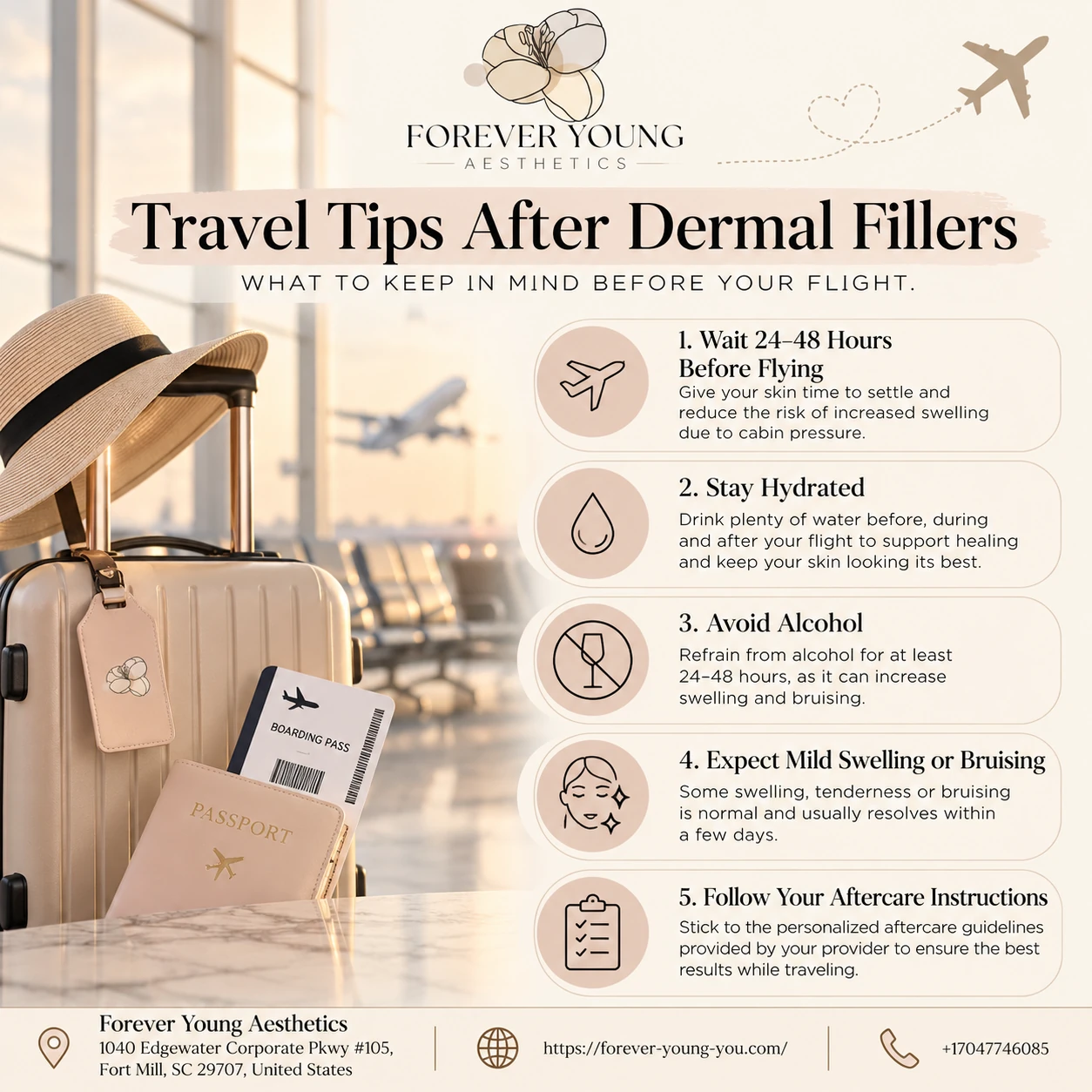
What Should You Pack for Post-Filler Travel?
You usually do not need a complicated filler recovery kit.
A few practical items may make travel easier:
- Your injector’s contact information
- Any aftercare instructions you were given
- Any products specifically recommended by your provider
- Gentle skincare products you already tolerate
- Lip balm if your lips feel dry
- Water for normal hydration
- Sunscreen for your destination
- A clean, soft travel pillow if needed
- Information about the filler product you received
If your injector gives you documentation showing which product was used and where it was placed, consider keeping that information available while traveling.
This may be useful if you unexpectedly need medical evaluation away from home.
Do not begin taking medications or supplements specifically for post-filler swelling unless they have been approved by an appropriate healthcare professional.
When Should You Delay Your Flight?
Consider speaking with your injector before flying if your recovery is not progressing as expected.
Reasons to reconsider travel may include:
- Significant or rapidly increasing swelling
- Unusual or increasing pain
- Increasing redness or warmth
- Skin color changes around the injection area
- Drainage or signs of infection
- Significant asymmetry that appeared suddenly
- Vision symptoms
- Feeling generally unwell after treatment
- Any reaction your injector has told you requires assessment
You may also choose to delay treatment itself rather than delay your flight.
If your travel dates are fixed, scheduling filler treatment after your trip may sometimes be the simpler choice, particularly when you cannot leave enough time for normal swelling and bruising to settle.
For major vacations or important events, discuss timing during your consultation rather than assuming a last-minute appointment will provide the appearance you want by departure day.
When Should You Contact Your Injector?
Contact your injector whenever symptoms seem substantially different from what was explained during your appointment.
Some swelling, tenderness, bruising, and redness may occur after dermal filler treatment.
However, certain symptoms require more urgent attention.
The FDA advises patients to seek immediate medical care for unusual pain, vision changes, skin near the injection site turning white, gray, or blue, or symptoms associated with stroke.
These complications are rare, but they are important because filler accidentally entering a blood vessel can interrupt the blood supply to tissue and, in severe situations, cause tissue damage, blindness, or stroke.
Do not board a flight if you are experiencing symptoms that may represent a serious filler complication.
Seek appropriate medical care first.
For less urgent questions, contact the practice that performed your injections. Your injector knows which filler was used, where it was placed, and what your expected recovery should look like.
FAQs
Can I fly the same day I get dermal fillers?
Some patients may be able to travel soon after treatment, but same-day flying is not automatically appropriate for everyone. Your injector may prefer that you remain nearby depending on the filler, area treated, your medical history, and how you respond immediately after treatment. Ask before scheduling your flight.
Will airplane pressure make my fillers move?
Routine commercial cabin pressure is not identified in current FDA or American Society of Plastic Surgeons guidance as a typical cause of filler migration. The more relevant concerns after treatment are swelling, bruising, discomfort, and recognizing uncommon complications.
Will my face swell more on a plane after fillers?
Temporary swelling is already common after dermal fillers. Some patients may feel more swollen or uncomfortable while traveling, but the degree varies. Significant, painful, discolored, or worsening swelling should be evaluated rather than automatically blamed on air travel.
Should I get filler right before vacation?
It is usually worth building recovery time into your schedule. Filler results can look swollen, bruised, or temporarily uneven before settling. If appearance matters during your trip, discuss the travel date with your injector when scheduling treatment.
Can I take a long-haul flight after dermal fillers?
Possibly, but long flights create additional practical considerations. You will be farther from your injector for longer, the cabin can feel dry, and managing swelling or an unexpected reaction may be less convenient. Ask your injector whether your specific treatment and recovery make a long-haul trip appropriate.
What happens if I notice unusual swelling while traveling?
Contact your injector and describe your symptoms. If you experience severe or unusual pain, vision changes, concerning skin discoloration, or neurological symptoms, seek immediate medical attention rather than waiting until you return home.
Planning Dermal Fillers Around Your Next Trip
Travel does not necessarily have to interfere with dermal filler treatment, but thoughtful scheduling can make recovery much easier.
At Forever Young Aesthetics, we encourage patients to tell us about upcoming flights, vacations, weddings, work trips, or other important events before treatment. That allows us to discuss what temporary swelling or bruising may look like and provide aftercare guidance for the specific filler and treatment area involved.
If you are already planning on flying after dermal fillers, follow the instructions provided at your appointment and contact us if anything about your recovery concerns you. Giving yourself some flexibility between treatment and travel can also help you enjoy your trip without worrying about whether normal early swelling has had enough time to settle.
Every filler treatment and every patient is different, so your injector’s recommendations should always guide your individual travel plans.