

Having coffee before Botox does not appear to directly interfere with how Botox works, but caffeine can affect how some patients feel during an appointment. It may temporarily raise blood pressure, increase heart rate, or make people who are sensitive to caffeine feel jittery or anxious.
Some injectors may therefore recommend limiting caffeine before treatment, particularly if you tend to become flushed, nervous, or experience palpitations after coffee. There is less evidence that coffee itself is a major cause of Botox bruising, so recommendations can vary. At Forever Young Aesthetics, we recommend following the preparation instructions provided for your individual treatment rather than assuming everyone needs to completely avoid caffeine.
Can You Drink Coffee Before Botox?
For many patients, drinking coffee before Botox is not automatically a problem.
Caffeine is not identified in current BOTOX Cosmetic prescribing information as a substance known to prevent the treatment from working. The official drug interaction section instead focuses on medications such as aminoglycoside antibiotics, drugs that interfere with neuromuscular transmission, anticholinergic medications, other botulinum toxin products, and muscle relaxants.
That said, your injector may still recommend reducing or avoiding coffee shortly before your appointment.
The reason is usually not the Botox itself. It is how caffeine affects you.
Some people can drink coffee without noticing much beyond increased alertness. Others experience a racing heartbeat, shaky hands, flushing, nervousness, or increased anxiety. Mayo Clinic notes that caffeine sensitivity varies considerably between individuals and that some people experience unwanted symptoms even after relatively small amounts.
If coffee normally makes you feel calm and alert, a modest amount may be less relevant than it would be for someone who becomes visibly jittery after one cup.
Always follow your injector’s specific instructions.
Does Caffeine Increase Bruising Before Botox?
The relationship between caffeine and Botox bruising is not as clear as many online aftercare lists suggest.
Bruising itself is a known temporary effect of botulinum toxin injections. The American Academy of Dermatology explains that the needle can occasionally cause bruising at an injection site and that this usually resolves with time.
Certain factors have a clearer association with bruising. For example, Cleveland Clinic advises patients to tell their provider about blood thinners and nonsteroidal anti-inflammatory drugs because these can increase bruising risk. It also notes that alcohol can make patients more prone to redness and bruising.
The evidence that a normal cup of coffee directly causes significant bruising after Botox is much less established.
Caffeine may temporarily affect cardiovascular responses in some people, and some aesthetic providers choose to limit it as a precaution. However, patients should not assume that drinking coffee guarantees bruising or that eliminating caffeine guarantees a bruise-free appointment.
Injection technique, treatment location, medications, supplements, individual blood vessels, and natural tendency to bruise can all play a role.
Can Coffee Affect Blood Pressure or Anxiety Before Treatment?
Yes, this is one of the more practical reasons to think about caffeine before Botox.
Caffeine can cause a temporary rise in blood pressure, particularly in people who do not regularly consume it. Mayo Clinic notes that the response varies from person to person and that regular caffeine users often develop some tolerance to this effect.
Caffeine can also cause symptoms such as nervousness, restlessness, a fast heartbeat, tremors, or anxiety in sensitive individuals.
That may matter during an injectable appointment.
Botox injections are quick, but patients who are already anxious about needles may find the experience less comfortable if they arrive feeling overstimulated from a large coffee or energy drink.
If your provider checks your blood pressure before treatment, recent caffeine intake can also influence the reading. Mayo Clinic recommends avoiding caffeine for at least 30 minutes before a blood pressure measurement when an accurate reading is needed.
This does not mean coffee is dangerous for every Botox patient. It simply means that your normal reaction to caffeine should be considered.
If coffee regularly makes your heart race or increases your anxiety, skipping or reducing it before your appointment may make the experience more comfortable.
How Long Before Botox Should You Limit Caffeine?
There is no universally established Botox rule requiring every patient to avoid caffeine for a specific number of hours.
Recommendations differ between injectors.
If your practice has given you written pre-treatment instructions telling you to avoid coffee or caffeine for a certain period, follow those instructions.
For patients whose main concern is an accurate blood pressure reading, avoiding caffeine for at least 30 minutes beforehand is commonly recommended for blood pressure testing.
However, your injector may recommend a longer period for other reasons, particularly if caffeine tends to make you noticeably anxious or jittery.
It is also worth considering your normal caffeine habits.
Someone who drinks several cups of coffee every morning may experience headache, fatigue, irritability, or difficulty concentrating if they suddenly stop all caffeine. Mayo Clinic notes that abruptly cutting caffeine can produce withdrawal symptoms and recommends reducing intake gradually when necessary.
There is usually little benefit in making yourself miserable with a caffeine-withdrawal headache before a cosmetic appointment unless your provider has specifically asked you to avoid caffeine.
Ask what applies to you.
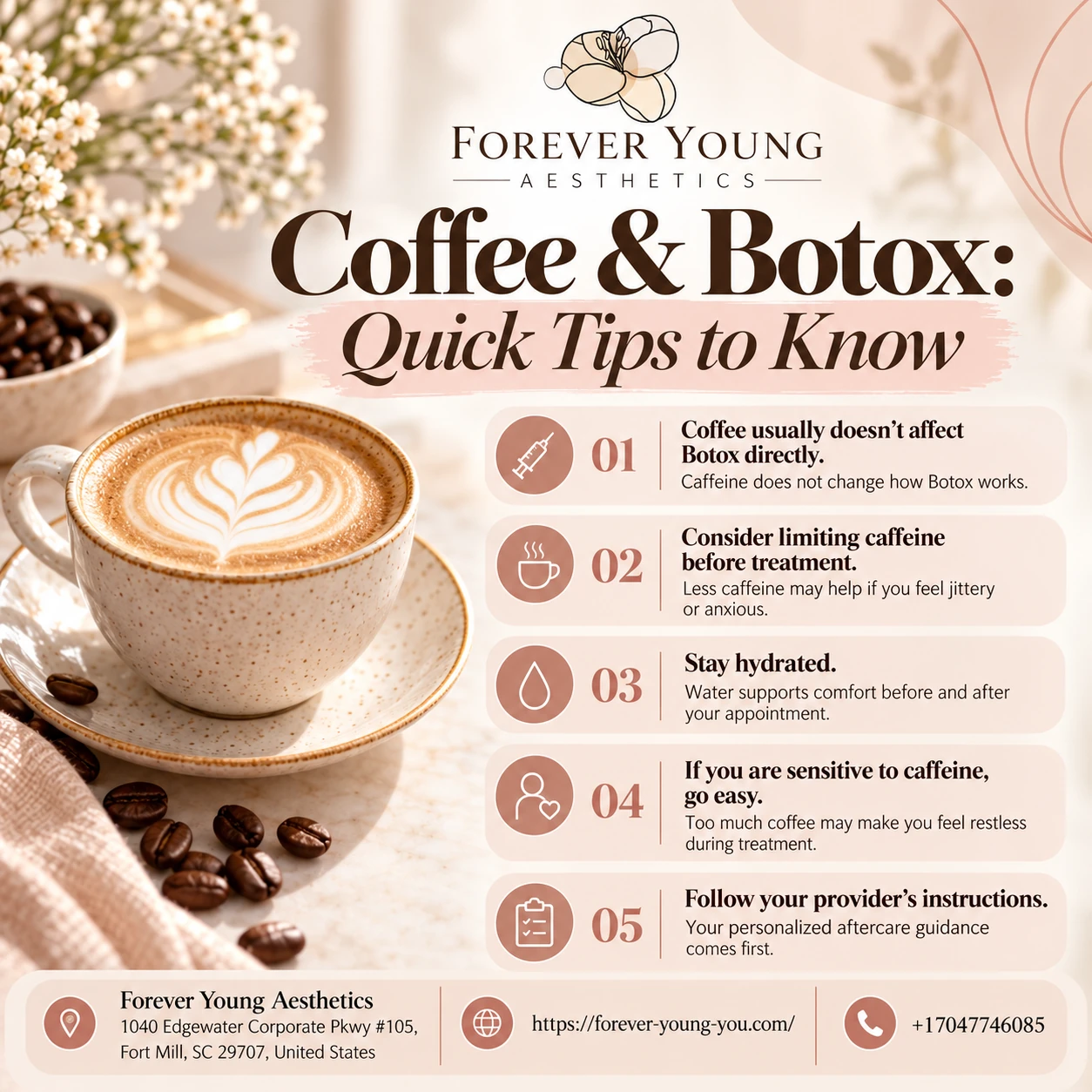
Can You Drink Coffee After Botox?
For most patients, coffee is not recognized as something that directly stops Botox from working after treatment.
Current BOTOX Cosmetic prescribing information does not identify ordinary caffeine consumption as a drug interaction known to reduce the effectiveness of the treatment.
Your injector may nevertheless recommend waiting before having a highly caffeinated drink, especially if you tend to experience flushing, elevated blood pressure, or jitteriness.
The early aftercare period is primarily about treating the injection sites gently.
The American Academy of Dermatology recommends avoiding rubbing or massaging treated areas and waiting before strenuous activities that significantly increase heart rate.
A normal cup of coffee is different from an intense workout, but if a large dose of caffeine makes your heart pound or leaves you feeling uncomfortable, there is no particular reason to rush to consume it immediately after your injections.
Follow the aftercare instructions provided at your appointment.
Does Caffeine Affect Botox Results?
There is no established evidence that ordinary coffee consumption directly neutralizes Botox or causes it to wear off immediately.
BOTOX Cosmetic works by temporarily reducing nerve signaling to targeted muscles. Its documented drug interactions involve substances that can influence neuromuscular transmission or increase certain systemic effects. Caffeine is not specifically listed among those recognized interactions in the current FDA-approved prescribing information.
This is an important distinction.
A provider recommending that you reduce caffeine before an appointment does not necessarily mean caffeine damages the treatment.
The advice may instead be intended to make your appointment more comfortable or reduce temporary factors such as jitteriness, flushing, heart-rate changes, or a higher blood pressure reading.
Botox results are much more dependent on factors such as proper product handling, dose, injection placement, muscle anatomy, and individual response.
You should still follow all provider instructions, even when a recommendation is intended primarily to improve comfort rather than Botox effectiveness.
What Other Drinks Should You Consider Before Treatment?
Water is a simple choice before a Botox appointment.
Being normally hydrated can help you feel comfortable, particularly if you have been busy, exercising, traveling, or spending time in hot weather.
Coffee does contain fluid and does not automatically dehydrate you. Mayo Clinic explains that caffeinated drinks can contribute to daily fluid intake and that the fluid in typical amounts of coffee generally balances caffeine’s mild diuretic effect. Water is still a straightforward hydration option.
Energy drinks deserve additional consideration because some contain substantially more caffeine than a typical serving of coffee, along with other stimulating ingredients. Caffeine content can vary significantly between drinks.
If highly caffeinated drinks normally cause palpitations, anxiety, or shakiness, your Botox appointment is probably not the ideal time to experiment with one.
Alcohol is another consideration. Unlike coffee, Cleveland Clinic specifically recommends avoiding alcohol before Botox because it can make patients more prone to redness and bruising.
Your provider may give you additional instructions depending on your health history and planned treatment.
How to Prepare for a Botox Appointment
Botox preparation does not usually require a complicated routine. A few practical steps can help your provider plan treatment safely and make your appointment more comfortable.
- Follow the instructions from your injector. If you have been told to limit caffeine, alcohol, particular skincare products, or certain activities, use those instructions rather than a generic checklist online.
- Tell your provider about medications and supplements. The American Academy of Dermatology recommends disclosing prescription medications, over-the-counter pain relievers, blood thinners, vitamins, herbs, and minerals before botulinum toxin treatment.
- Do not stop prescribed medication on your own. If something you take may affect bruising or treatment, ask the healthcare professional managing that medication before making changes.
- Eat and drink normally unless instructed otherwise. Botox does not generally require fasting. Arriving hungry, dehydrated, or overloaded with caffeine may simply make some patients feel less comfortable.
- Consider how caffeine affects you personally. If a large coffee routinely makes you anxious or shaky, choose a smaller serving, decaffeinated coffee, or water before your appointment.
- Share relevant medical and cosmetic history. Tell your injector about previous Botox treatments, cosmetic procedures, medical conditions, and any previous unusual reactions.
The goal is not to create a perfect pre-Botox routine. It is to give your provider enough information to make appropriate recommendations for you.
When Should You Ask Your Provider About Caffeine?
Ask your provider if you are uncertain whether your normal caffeine routine should change around your appointment.
It is especially worth mentioning caffeine if you have high blood pressure, experience palpitations after coffee, are sensitive to stimulants, become anxious before injections, regularly consume large amounts of caffeine, or use energy drinks or caffeine-containing supplements.
Caffeine can temporarily raise blood pressure in some people, and that effect is more noticeable in certain individuals than others.
You should also mention any medications or health conditions that could affect how your body responds to stimulants.
The answer may simply be that your normal morning coffee is fine. In another patient, the provider may suggest reducing caffeine to make the visit more comfortable.
That individualized approach is more useful than applying the same rule to everyone.
FAQs
Can I have coffee the morning of Botox?
Possibly. There is no universal rule requiring every Botox patient to avoid coffee completely. If your provider has told you to limit caffeine, follow their instructions. Patients who become anxious, shaky, or experience increased blood pressure after coffee may be more comfortable reducing it before treatment.
Will coffee make me bruise after Botox?
Bruising is possible after Botox because the injection needle can affect small blood vessels. Current evidence does not establish a normal serving of coffee as a major direct cause of Botox bruising. Medications, supplements, alcohol use, treatment location, injection technique, and individual tendency to bruise may be more relevant factors.
Does coffee make Botox wear off faster?
There is no established evidence that ordinary coffee consumption causes Botox to wear off faster. Caffeine is not identified as a drug interaction that neutralizes BOTOX Cosmetic in current prescribing information.
Should I switch to decaf before Botox?
You do not necessarily need to unless your provider recommends it. Decaf can be a practical option if you enjoy your normal coffee routine but want to reduce caffeine because it makes you nervous or increases your heart rate.
Can I drink an energy drink before Botox?
Ask your provider, particularly if the drink contains a large amount of caffeine or other stimulants. Energy drinks can vary considerably in caffeine content, and a high dose may cause jitteriness, palpitations, or temporary blood pressure changes in sensitive people.
Should I drink extra water before Botox?
There is usually no need to force excessive amounts of water. Normal hydration is sufficient for most people unless a healthcare professional has given you different advice. Coffee can contribute to fluid intake, although water remains a simple caffeine-free choice.
Preparing for Botox at Forever Young Aesthetics
For most patients, coffee before Botox is more of a comfort consideration than a question of whether the treatment will work. Caffeine can temporarily affect blood pressure, heart rate, or anxiety in some people, but there is no good evidence that an ordinary cup of coffee directly prevents Botox from taking effect.
At Forever Young Aesthetics, we encourage patients to tell us about their normal caffeine intake, medications, supplements, medical history, and any previous experiences with injectables. Those details help us provide preparation and aftercare recommendations that make sense for the individual rather than relying on a one-size-fits-all rule.
If you are unsure whether to have your usual morning coffee, reduce caffeine, or choose decaf before your appointment, contact our team or ask during your consultation. Your provider’s instructions should always take priority over generalized advice online.