
If you are planning Botox, you may be wondering whether having a drink before or after your appointment matters. Recommendations about alcohol before and after Botox can vary, but many providers suggest limiting alcohol around treatment because it may make redness, swelling, or bruising more noticeable.
Alcohol is not generally considered something that directly cancels out Botox. The bigger concern is making the injection and recovery period as comfortable as possible. At Forever Young Aesthetics, we recommend following the specific instructions given for your treatment rather than assuming one waiting period applies to everyone.
Can You Drink Alcohol Before Botox?
It may be best to avoid alcohol before a Botox appointment, particularly if your injector has specifically instructed you to do so.
Botox is administered through a series of small injections. Even though the needles used are very fine, they can occasionally affect tiny blood vessels beneath the skin, resulting in small areas of bruising.
Cleveland Clinic notes that alcohol can make people more prone to redness and bruising and recommends avoiding it before Botox treatment.
That does not mean having alcohol before Botox automatically makes the treatment unsafe or guarantees that you will bruise.
Some patients bruise even when they have followed every precaution, while others experience almost no visible marks.
The goal of limiting alcohol is generally to reduce avoidable factors that might make bruising or swelling more noticeable.
If you drank alcohol recently and have a Botox appointment scheduled, do not automatically cancel the appointment. Contact your provider and let them know. They can advise you based on how much you drank, when you drank it, and your individual circumstances.
Why Can Alcohol Increase Bruising or Swelling?
Bruising occurs when a needle damages a small blood vessel and a small amount of blood collects beneath the skin.
The American Academy of Dermatology lists bruising, redness, swelling, and soreness among the possible temporary effects following botulinum toxin injections.
Alcohol can contribute to redness and may make bruising more noticeable around the time of injections. Cleveland Clinic specifically identifies alcohol as something that can make patients more prone to redness and bruising before Botox.
This is why providers sometimes recommend avoiding drinks such as:
- Wine
- Beer
- Cocktails
- Spirits
- Other alcoholic beverages
around an injectable appointment.
This precaution is mainly about limiting bruising and improving comfort. It should not be interpreted as evidence that alcohol will always cause a complication.
Individual tendencies matter too. Some patients naturally bruise more easily than others, and medications, supplements, skin characteristics, treatment location, and injection technique may all influence bruising.
How Long Before Botox Should You Avoid Alcohol?
There is no single alcohol restriction that every Botox patient must follow.
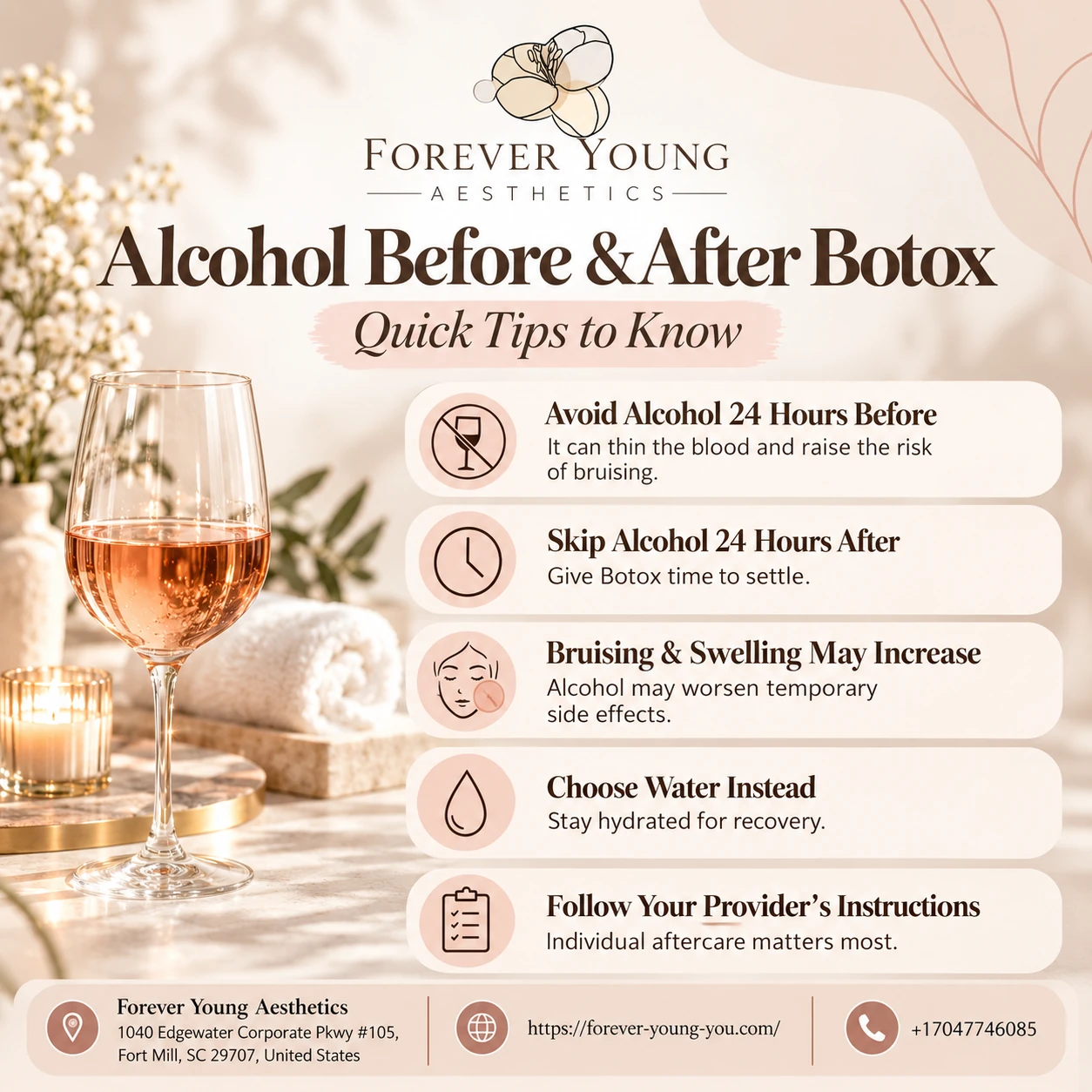
Cleveland Clinic advises avoiding alcohol for 24 hours before a Botox procedure because it can increase susceptibility to redness and bruising. Other providers may use somewhat different instructions based on their treatment protocols and the patient’s circumstances.
Instead of choosing a timeline from social media or another patient’s experience, ask your injector what they recommend.
Your provider may consider factors such as:
- Whether you bruise easily
- The areas being treated
- Your medications
- Supplements you take
- Previous experiences with injectable treatments
- Other procedures being performed at the same appointment
- Your general health history
If your treatment is approaching and you are unsure about alcohol, contact the practice before your appointment.
It is also important to be truthful with your injector about alcohol use, medications, and supplements. This information helps them plan your treatment appropriately.
Can You Drink Alcohol After Botox?
Your injector may recommend skipping alcohol for a period after Botox as well.
Again, the primary concern is usually bruising, redness, and swelling rather than alcohol suddenly stopping Botox from working.
Cleveland Clinic’s Botox aftercare guidance recommends skipping alcohol on the day of treatment, noting that avoiding certain substances may help minimize bruising.
Right after an appointment, the injection sites may already be slightly pink, tender, or swollen. Adding something that may make redness or bruising more noticeable may simply make the early recovery period less comfortable.
There are also practical reasons to avoid drinking immediately after treatment.
Alcohol can affect judgment, making it easier to forget instructions such as avoiding rubbing or massaging the treated areas.
If your provider gives you a specific timeframe for avoiding alcohol, follow that recommendation.
How Long Should You Wait After Treatment?
There is no universal waiting period for drinking alcohol after Botox.
Some providers recommend avoiding it for the remainder of the treatment day, while others may recommend a longer interval depending on your bruising risk, treatment areas, or other factors.
For example, Cleveland Clinic advises avoiding alcohol on Botox day, while its guidance for certain botulinum toxin procedures, such as a lip flip, recommends avoiding alcohol for at least 24 hours because it can worsen bruising.
These examples show why it is better to follow instructions for your actual treatment than adopt one rule for every situation.
If you have a social event planned shortly after Botox, mention it during your consultation. Your injector can help you decide whether scheduling treatment on a different day would make recovery more convenient.
Does Alcohol Affect Botox Results?
There is not good evidence that having an alcoholic drink directly deactivates Botox once it has been properly injected.
The current BOTOX Cosmetic prescribing information identifies several important medication interactions, including certain drugs that interfere with neuromuscular transmission, anticholinergic medications, other botulinum toxin products, and muscle relaxants. Alcohol is not listed as a specific drug interaction that neutralizes BOTOX Cosmetic.
That distinction is important.
Avoiding alcohol around treatment is generally recommended because of issues such as bruising, redness, swelling, and overall recovery, not because a glass of wine automatically makes Botox ineffective.
However, alcohol could indirectly make aftercare more difficult if it leads you to forget instructions or handle the treated areas more aggressively.
For the best experience, follow your provider’s instructions even when a particular precaution is intended mainly to minimize temporary side effects.
What Other Things Should You Avoid Around Your Appointment?
Alcohol is only one part of Botox preparation and aftercare.
Your provider may give you additional instructions based on your health history and treatment.
Rubbing or massaging treated areas
The American Academy of Dermatology recommends avoiding rubbing or massaging Botox injection sites because unnecessary pressure could contribute to the product spreading beyond the intended area.
Touching your face gently is different from deliberately massaging it.
Be particularly careful when:
- Applying makeup
- Removing makeup
- Washing your face
- Using skincare products
- Putting on tight hats or headbands
Strenuous physical activity
Guidance varies between providers.
The American Academy of Dermatology recommends waiting at least two hours before strenuous activity that significantly raises the heart rate. Cleveland Clinic notes that providers may use different recommendations and that increased blood pressure from exercise could make bruising more likely.
Follow the instructions given at your own appointment.
Certain medications and supplements
Some medications can increase bruising risk.
Cleveland Clinic notes that anticoagulants and nonsteroidal anti-inflammatory drugs may increase bruising around Botox injections.
However, do not stop a prescription medication simply because you have a Botox appointment.
If you take blood thinners, aspirin, anti-inflammatory medications, or supplements, tell your injector. Medication changes should only be made with guidance from the healthcare professional responsible for prescribing or managing them.
Facial treatments
Treatments involving significant pressure or manipulation of the face may need to be postponed.
That can include:
- Facial massage
- Certain facials
- Aggressive exfoliation
- Some device-based treatments
Ask your injector when these activities can safely be resumed.
What Can Help Reduce Bruising After Botox?
You cannot completely guarantee that you will not bruise after Botox.
Even when treatment is performed carefully, a tiny injection needle can occasionally encounter a small blood vessel.
There are, however, practical ways to make early recovery easier.
Follow your preparation instructions
If your provider asks you to avoid alcohol before treatment, following that recommendation may help reduce avoidable redness or bruising.
Tell your injector about medications and supplements
Provide a complete medication and supplement list before treatment.
Do not assume something is irrelevant simply because it is available without a prescription.
Avoid unnecessary pressure
Do not massage or aggressively rub injection sites after treatment.
The American Academy of Dermatology specifically recommends avoiding massage or rubbing following botulinum toxin injections.
Use a cool compress only if recommended
Cleveland Clinic notes that a cool compress or an ice pack wrapped in a towel may be used briefly for swelling following Botox.
Avoid pressing firmly against the treatment area.
Stay normally hydrated
Drink fluids normally before and after your appointment unless you have been given different medical instructions.
Water will not make Botox work faster or eliminate bruising, but maintaining normal hydration is sensible for overall comfort.
Give bruising time
Small bruises can happen even when everything has gone exactly as planned.
The American Academy of Dermatology notes that occasional bruising following botulinum toxin injections may last about a week.
If bruising appears unusual, becomes increasingly painful, or concerns you, contact your provider.
When Should You Follow Different Aftercare Instructions?
General online recommendations should never replace personalized medical guidance.
You may receive different instructions if:
- You were treated in a particular facial area
- You received another injectable at the same appointment
- You had another cosmetic procedure performed
- You take medications that affect bleeding or bruising
- You have a medical condition relevant to treatment
- You previously reacted differently to Botox
- Your provider uses a specific aftercare protocol
For example, someone who receives Botox alone may receive different recommendations from someone who receives Botox, dermal filler, and another aesthetic procedure during the same visit.
Your provider knows exactly what was injected, where it was placed, and what other treatments were performed.
Follow those instructions first.
If something you read online conflicts with your written aftercare instructions, contact your injector rather than trying to decide which recommendation applies.
When Should You Contact Your Provider?
Mild redness, swelling, soreness, and bruising around injection sites can occur following Botox treatment.
Contact your provider if you experience something unexpected or if your symptoms appear to be getting worse instead of improving.
You should also seek medical advice if you develop symptoms such as:
- Significant or worsening swelling
- Increasing redness or pain
- Signs of infection
- Significant facial weakness
- Unexpected eyelid or eyebrow drooping
- Vision problems
- A concerning allergic reaction
BOTOX Cosmetic also carries a boxed warning about the possibility of toxin effects spreading beyond the injection area. Patients should seek medical attention immediately for problems with swallowing, speaking, or breathing.
These serious reactions are not the same as the minor redness or bruising that can occur at an injection site.
When in doubt, contact the practice that performed your treatment.
FAQs
Can I have one glass of wine before Botox?
Many providers recommend avoiding alcohol before treatment because it may increase redness or bruising. Cleveland Clinic recommends avoiding alcohol for 24 hours before Botox, although individual provider instructions may differ.
If you have already had a drink, contact your injector rather than automatically assuming your appointment needs to be canceled.
Can I drink wine the night after Botox?
Your provider may recommend skipping alcohol on the day of your Botox treatment or for a longer period depending on your circumstances. The concern is generally minimizing bruising, redness, and swelling rather than alcohol directly deactivating Botox.
Does alcohol make Botox wear off faster?
There is no established evidence that occasional alcohol consumption directly causes properly administered Botox to wear off faster. Recommendations to avoid alcohol around treatment are generally related to bruising and recovery.
What happens if I accidentally drink alcohol after Botox?
Do not panic. Having a drink does not automatically mean your treatment has been ruined.
Follow the remainder of your aftercare instructions, avoid unnecessary rubbing or pressure on the treated areas, and contact your provider if you have concerns.
Can alcohol make Botox bruising worse?
It may. Cleveland Clinic notes that alcohol can make people more prone to redness and bruising, which is why some providers recommend limiting it around Botox appointments.
Should I drink extra water after Botox if I had alcohol?
Normal hydration is sensible, especially after alcohol, but drinking extra water does not reverse alcohol’s effects on bruising or make Botox settle faster. Follow your normal hydration needs and any instructions provided by your healthcare professional.
Planning Your Botox Appointment Around Your Lifestyle
Botox typically requires little downtime, but small choices around your appointment can make the recovery period easier. Limiting alcohol before and after Botox may help reduce avoidable redness or bruising, particularly for patients who already tend to bruise easily.
At Forever Young Aesthetics, we want patients to understand both what to expect from treatment and how to care for the treated areas afterward. Tell us about medications, supplements, upcoming events, travel plans, and any questions you have about alcohol before your appointment so we can provide guidance specific to your treatment.
If you have already received Botox and are unsure whether it is appropriate to drink alcohol, exercise, apply makeup, or resume another activity, follow the instructions provided at your appointment or contact our team.
Personalized guidance from the provider who performed your treatment should always take priority over a one-size-fits-all recovery timeline.