
Skin barrier repair after cosmetic treatments usually means giving the skin time to rebuild its natural protective function while avoiding products or habits that increase irritation. Treatments such as chemical peels, microneedling, lasers, and some resurfacing procedures can temporarily make the skin more sensitive, dry, red, or reactive.
Recovery is often straightforward when aftercare is kept simple. Gentle cleansing, consistent hydration, sun protection, and avoiding aggressive skincare products can help support healing. Most importantly, follow the instructions provided by your treatment provider because recovery needs can vary significantly depending on the procedure performed.
What Is the Skin Barrier?
The skin barrier is the outermost part of the skin that helps keep moisture in and irritants, microorganisms, and environmental stressors out.
It is often compared to a brick wall.
Skin cells act like the bricks, while natural lipids such as ceramides, cholesterol, and fatty acids help form the material between them.
When the barrier is functioning well, skin tends to feel:
- Comfortable
- Smooth
- Flexible
- Hydrated
- Less reactive to products
When the barrier becomes disrupted, water can escape more easily and outside substances can penetrate more readily.
That can lead to:
- Dryness
- Tightness
- Stinging
- Increased redness
- Flaking
- Sensitivity
- Irritation from products that normally feel comfortable
Some cosmetic treatments intentionally create a controlled amount of skin injury or exfoliation to stimulate renewal. That means temporary barrier disruption can be an expected part of the process.
How Cosmetic Treatments Affect the Skin Barrier
Different cosmetic treatments affect the skin in different ways.
Some exfoliate the outermost layers. Others create microscopic channels, use heat, or stimulate controlled tissue remodeling.
Examples include:
Chemical Peels
Chemical peels remove varying amounts of the outer skin layers depending on their strength.
A superficial peel may cause mild dryness or flaking, while deeper peels can involve significantly more recovery.
Microneedling
Microneedling creates controlled microscopic channels in the skin.
This temporarily increases sensitivity while the skin begins repairing itself.
Laser Resurfacing
Laser treatments can affect the skin surface and deeper tissue depending on whether the treatment is ablative, non-ablative, fractional, or another type.
Recovery varies considerably between technologies.
Other Resurfacing Treatments
Dermaplaning, microdermabrasion, and certain facial treatments can also temporarily affect the outer barrier, particularly when multiple exfoliating procedures are combined.
The amount of irritation you experience depends on factors such as:
- Treatment type
- Treatment intensity
- Skin type
- Existing skin conditions
- Products used before and after treatment
- Sun exposure
- Individual healing response
This is why post-treatment skincare should not be treated as one-size-fits-all.
Signs Your Skin Barrier Is Recovering
Some temporary redness, dryness, or sensitivity may be expected after certain treatments.
As the barrier recovers, you may notice:
- Less tightness
- Reduced redness
- Less stinging
- Improved comfort when applying moisturizer
- Decreased flaking
- Better moisture retention
- Skin feeling smoother and less reactive
The skin may not look completely normal immediately.
For example, mild peeling after some chemical treatments may be part of the expected recovery process.
What matters is the overall direction.
Symptoms should generally become more manageable rather than progressively worsening.
If the skin becomes increasingly painful, swollen, intensely red, blistered, or begins producing unusual drainage, contact your provider instead of assuming that it is normal healing.
How to Support Skin Barrier Repair After Treatments
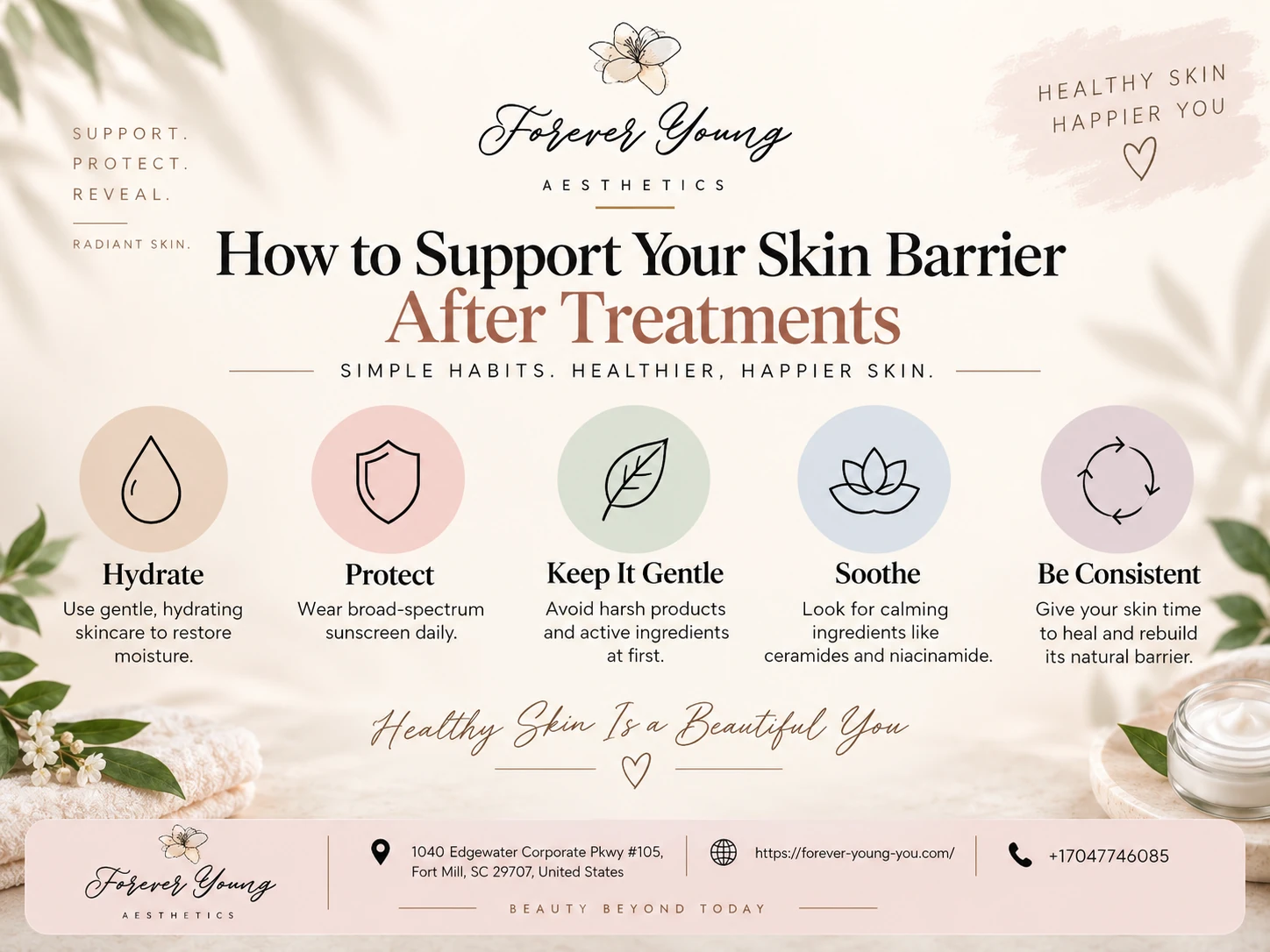
The most useful approach is often to simplify your routine.
Immediately after treatment is usually not the time to experiment with new active ingredients or create a complicated skincare regimen.
A basic recovery routine may involve:
- Use a gentle cleanser.
Choose a mild product that does not leave the skin feeling stripped or tight. - Apply moisturizer consistently.
A simple moisturizer can help reduce moisture loss and support barrier function. - Follow your provider’s aftercare instructions.
Different procedures have different restrictions. - Avoid picking or peeling skin.
Let flaking skin shed naturally. - Limit unnecessary irritation.
Avoid scrubs, brushes, strong actives, and aggressive cleansing. - Protect the skin from sunlight.
Treated skin can be especially sensitive to UV exposure. - Introduce regular products gradually.
Do not restart every serum and active ingredient at once.
Recovery is usually helped more by consistency than by using a large number of products.
Best Skincare Ingredients During Recovery
During barrier recovery, simple moisturizing and soothing ingredients are often more appropriate than aggressive corrective treatments.
Depending on your procedure and provider’s recommendations, useful ingredients may include:
Ceramides
Ceramides are lipids naturally found in the skin barrier.
Moisturizers containing ceramides may help support the barrier while the skin recovers.
Glycerin
Glycerin is a humectant that attracts water and can help support hydration.
Hyaluronic Acid
Hyaluronic acid can help attract and hold moisture.
However, even generally gentle ingredients may sting on freshly treated skin, so follow your provider’s specific instructions.
Squalane
Squalane can help reduce moisture loss and often works well in simple barrier-focused routines.
Petrolatum
Petrolatum is highly effective at reducing water loss from the skin.
Some providers recommend occlusive ointments after specific procedures, while others may prefer different products depending on the treatment.
Panthenol
Panthenol is commonly included in soothing and moisturizing skincare products and may help improve skin comfort during recovery.
The most important factor is not finding the longest ingredient list.
Choose products that are bland, fragrance-free when possible, and compatible with your specific aftercare plan.
What Ingredients Should You Avoid After Treatment?
A product that is helpful during normal skincare may be too irritating immediately after a cosmetic treatment.
Depending on the procedure, your provider may recommend temporarily avoiding:
- Retinoids
- Retinol
- Tretinoin
- Glycolic acid
- Lactic acid
- Salicylic acid
- Strong vitamin C products
- Benzoyl peroxide
- Physical scrubs
- Exfoliating brushes
- Strong peels
- Fragranced or highly active products
The exact waiting period varies.
Someone recovering from a mild superficial treatment may be able to restart products sooner than someone who has undergone laser resurfacing or a stronger peel.
Do not use a fixed number of days from an online article as a substitute for your provider’s aftercare instructions.
When restarting active ingredients, introduce them gradually.
If the skin immediately begins burning, stinging, or becoming significantly red, it may not be ready.
How to Keep Treated Skin Hydrated
Hydration becomes particularly important when the barrier is temporarily compromised because the skin may lose water more easily.
Start with a mild cleanser and avoid hot water.
Very hot showers and aggressive washing can increase dryness and discomfort.
Apply moisturizer while the skin is slightly damp if your provider permits it. This can help reduce water loss.
You may also benefit from:
- Using moisturizer more frequently than usual
- Choosing creams over lightweight gels if the skin is very dry
- Avoiding alcohol-heavy or strongly fragranced products
- Running a humidifier in very dry indoor environments
- Avoiding prolonged hot showers
- Drinking normally according to your hydration needs
Drinking extra water alone does not repair the skin barrier.
Topical moisturization and avoiding irritation are usually more directly relevant to the skin’s surface recovery.
Why Sun Protection Matters During Recovery
Sun protection is one of the most important parts of post-treatment care.
Many cosmetic procedures make the skin temporarily more vulnerable to UV damage.
Sun exposure during recovery can contribute to:
- Increased redness
- Prolonged irritation
- Darkening of treated areas
- Uneven pigmentation
- Slower-looking recovery
- Reduced cosmetic benefit from the procedure
Use the sunscreen recommended by your provider.
For sensitive post-treatment skin, some people tolerate mineral sunscreens containing zinc oxide or titanium dioxide more comfortably, although individual tolerance varies.
Sun protection should also include behavioral measures.
Consider:
- Staying out of intense midday sun
- Wearing a wide-brimmed hat
- Seeking shade
- Reapplying sunscreen as directed
- Avoiding unnecessary prolonged outdoor exposure during early recovery
Even if your procedure is intended to improve sun damage, continued UV exposure can undermine those results.
Common Skin Barrier Recovery Mistakes
Most post-treatment problems do not come from doing too little.
They often come from doing too much.
Restarting Actives Too Quickly
Retinoids and exfoliating acids may normally be part of your routine, but restarting them too early can increase irritation.
Scrubbing Flaky Skin
Peeling skin can be tempting to remove.
Avoid scrubbing, pulling, or picking it off because that can damage skin underneath.
Using Too Many Products
More serums do not necessarily mean faster healing.
A simple routine is often better during the early recovery period.
Assuming Burning Means a Product Is Working
Burning and intense stinging are signs of irritation, not proof that a product is effective.
Skipping Sunscreen
Freshly treated skin can be particularly sensitive to UV exposure.
Over-Cleansing
Washing the face repeatedly or using harsh cleansers can remove oils the skin needs during recovery.
Copying Someone Else’s Recovery Routine
The right routine after microneedling may not be appropriate after laser resurfacing, a peel, or another treatment.
Your procedure should guide your aftercare.
When to Contact Your Treatment Provider
Some redness, swelling, flaking, or tenderness may be normal depending on the treatment.
However, contact your provider if symptoms seem more severe than expected or are getting worse rather than improving.
Reasons to reach out may include:
- Increasing pain
- Significant swelling
- Intense or spreading redness
- Blistering
- Open sores
- Pus or unusual drainage
- Fever
- Severe itching or rash
- Significant swelling around the eyes
- Skin discoloration that concerns you
- Symptoms lasting longer than your provider said to expect
If you simply are not sure whether something is normal, contacting the office is appropriate.
Post-treatment questions are part of your care.
It is better to ask than to begin applying additional products that could make irritation worse.
Give Your Skin Time to Recover
Good post-treatment skincare does not need to be complicated.
The most useful strategy is usually to keep the skin clean, hydrated, protected from the sun, and free from unnecessary irritation while the barrier rebuilds.
At Forever Young Aesthetic, we believe recovery is just as important as the treatment itself. Aftercare should be tailored to the procedure, your skin type, and how your skin responds in the days that follow.
Following your provider’s specific instructions, avoiding aggressive products, and giving your skin enough time to recover can help support comfortable healing and protect the results you worked to achieve.
FAQs
How long does it take for the skin barrier to recover after a cosmetic treatment?
It depends on the procedure. Mild treatments may cause sensitivity for only a short period, while stronger peels or resurfacing procedures may require significantly longer recovery. Follow the timeline provided by your treatment provider.
How do I know if my skin barrier is damaged after treatment?
Common signs include dryness, tightness, stinging, increased redness, sensitivity, and flaking. Some of these may be expected after certain treatments, but worsening pain, blistering, significant swelling, or drainage should be evaluated.
Can I use retinol while my skin is healing?
Usually not immediately after treatments that temporarily disrupt the barrier. Retinoids can increase irritation in sensitive skin. Ask your provider when it is appropriate to restart your specific product.
Is hyaluronic acid safe after cosmetic treatments?
It may be appropriate after some treatments, but not every product is suitable immediately after every procedure. Even normally gentle products can sting freshly treated skin. Use only products consistent with your provider’s aftercare instructions.
Should I exfoliate peeling skin after treatment?
No. Avoid scrubbing, picking, or manually peeling flaking skin unless your provider has specifically instructed otherwise. Allowing it to shed naturally reduces unnecessary irritation.
What is the most important product after a skin treatment?
There is no single product that is appropriate after every procedure. Gentle moisturization and sun protection are commonly important, but the specific products you should use depend on the treatment performed and your provider’s recommendations.