Jaw pain can affect much more than your ability to eat comfortably. Persistent tightness may make it difficult to speak, yawn, sleep, or concentrate throughout the day. Some people also experience headaches, facial soreness, tooth sensitivity, or a tired feeling in the jaw after chewing.
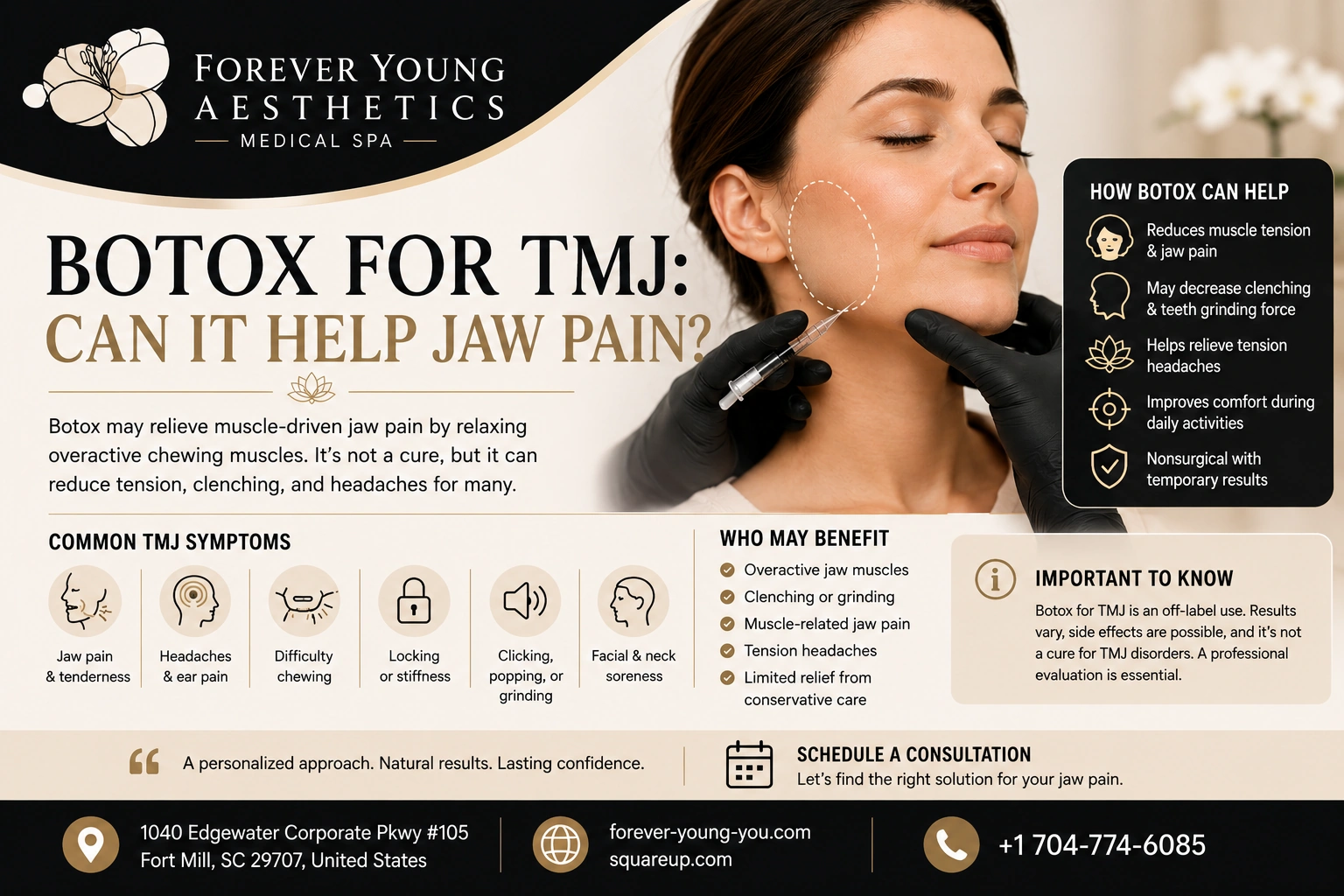
These symptoms are often associated with temporomandibular disorders, commonly called TMJ or TMD. While conservative approaches are usually recommended first, Botox for TMJ may be considered for certain patients whose symptoms are strongly connected to overactive or tense jaw muscles.
Botox does not repair the temporomandibular joint or cure the underlying disorder. However, temporarily relaxing selected chewing muscles may reduce muscle-related pain and tension for some patients. Because jaw discomfort can have several possible causes, a professional evaluation is necessary before deciding whether Botox belongs in an individual treatment plan.
Tired of TMJ Jaw Pain?
Explore Botox treatment for persistent jaw pain and muscle tension. Call today to get started.
What Is TMJ?
The temporomandibular joints are located on each side of the face, just in front of the ears. They connect the lower jaw to the skull and allow the jaw to move when a person speaks, chews, swallows, or yawns.
Technically, “TMJ” refers to the joint itself, while “TMD” describes a group of disorders affecting the jaw joints, the muscles responsible for chewing, or both. The National Institute of Dental and Craniofacial Research explains that temporomandibular disorders include more than 30 conditions associated with jaw pain and dysfunction.
Common TMD symptoms may include:
- Pain or tenderness in the jaw
- Tight or tired chewing muscles
- Facial, neck, or ear-area discomfort
- Tension headaches
- Difficulty or discomfort when chewing
- Limited jaw movement
- Jaw locking or stiffness
- Painful clicking, popping, or grinding
- Changes in how the upper and lower teeth meet
Clicking or popping without pain is common and does not always require treatment. However, joint sounds accompanied by discomfort, stiffness, locking, or limited movement should be evaluated.
TMD does not have one universal cause. Symptoms may be connected to jaw injuries, arthritis, joint-disc problems, teeth clenching, nighttime grinding, stress-related muscle tension, or repeated strain on the chewing muscles. In some cases, the exact cause remains unclear.
Because jaw and facial pain can also come from dental infections, nerve conditions, sinus problems, headaches, or other medical issues, proper diagnosis is an important first step.
How Can Botox Help Jaw Pain?
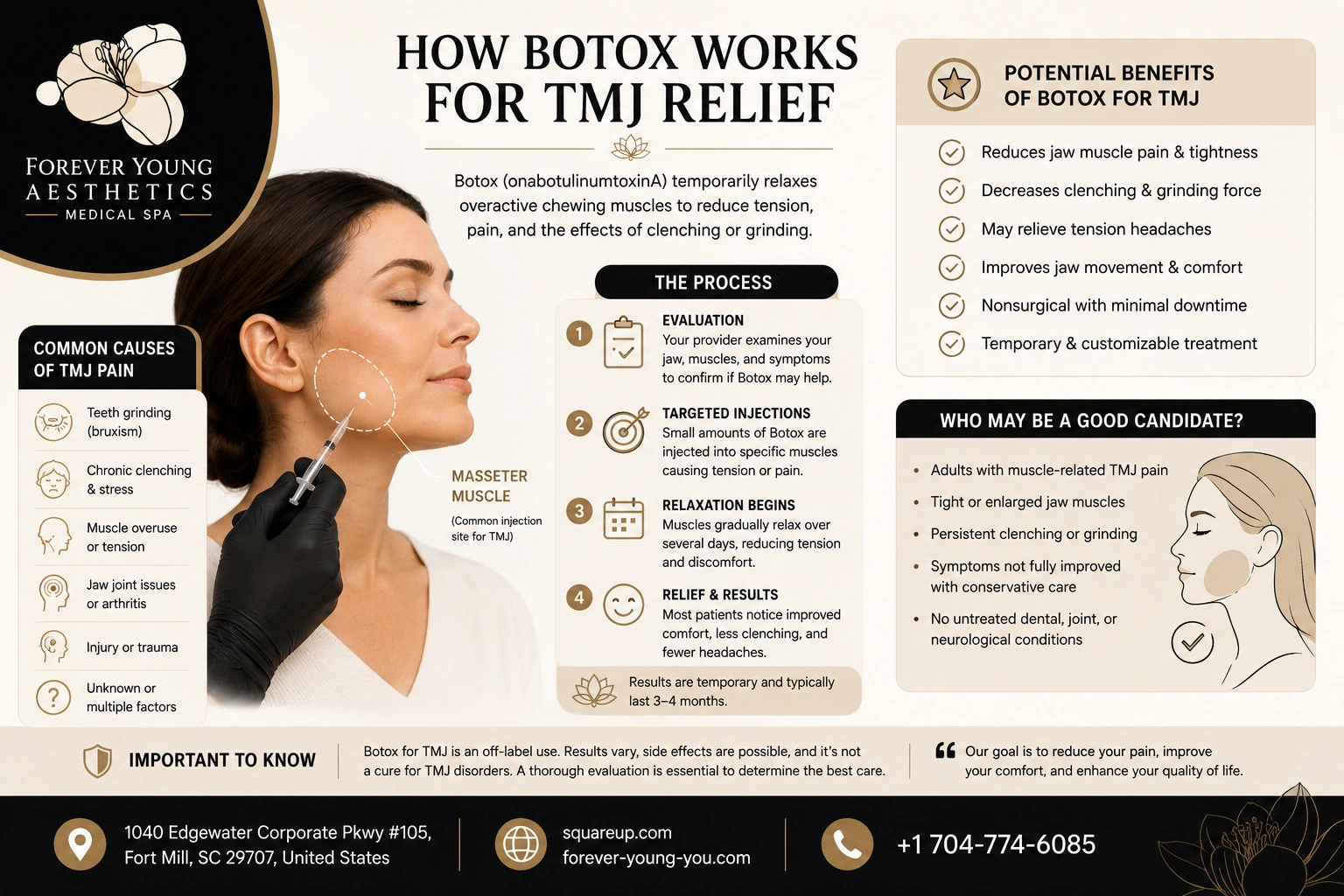
Botox is a brand name for onabotulinumtoxinA, a form of botulinum toxin type A. It works by blocking the release of acetylcholine, a chemical signal that tells muscles to contract. When injected into a targeted muscle, it temporarily reduces that muscle’s activity.
For muscle-related TMD symptoms, a trained provider may place injections into overactive chewing muscles, such as the masseter muscles along the sides of the jaw or the temporalis muscles near the temples. The goal is not to completely prevent jaw movement. Instead, treatment may reduce excessive muscle contraction while preserving the ability to speak and chew.
This temporary relaxation may be useful when jaw pain is driven by:
- Chronic clenching
- Repetitive teeth grinding
- Overworked chewing muscles
- Muscle spasms
- Persistent facial tension
- Muscle-related tension headaches
By reducing the force generated by these muscles, Botox may interrupt the cycle of clenching, muscle fatigue, inflammation, and pain. Some patients may also notice less pressure around the temples or lower face.
However, Botox is not equally appropriate for every type of TMD. It may be more relevant for myofascial or muscle-dominant pain than for symptoms caused primarily by arthritis, a displaced joint disc, structural damage, infection, or another condition inside the joint.
Botox use for TMD is also considered an off-label application in the United States. This means the medication has FDA-approved uses, but treating TMJ disorders is not one of the indications included in its FDA labeling. The FDA states that the safety and effectiveness of Botox for unapproved uses have not been established through the agency’s approval process.
Research findings remain mixed. Some studies suggest that botulinum toxin may reduce pain in selected patients with muscular TMD, while systematic reviews have noted uncertainty regarding effectiveness, ideal dosing, treatment duration, and long-term safety. The NIDCR currently states that conclusive evidence is not available to show that botulinum toxin injections into the chewing muscles reliably help TMDs.
For that reason, Botox should be discussed as one possible management option rather than a guaranteed solution.
What Are the Benefits of Botox for TMJ?
When the treatment is appropriately selected and administered, Botox for TMJmay offer several potential benefits.
Reduced muscle-related jaw pain
Relaxing an overactive masseter or temporalis muscle may reduce the soreness and fatigue caused by repeated clenching. This may be particularly helpful for people who describe their jaws as constantly tight, tired, or tender.
Fewer tension headaches
Jaw clenching can place significant strain on the muscles around the temples and sides of the head. When these muscles become less active, some patients may experience fewer or less intense muscle-related headaches.
Not every headache is connected to TMD, however. Recurring or severe headaches should be properly evaluated rather than automatically attributed to jaw tension.
Decreased grinding and clenching force
Botox does not necessarily stop the habit or neurological activity behind bruxism, which is the medical term for grinding or clenching. It may, however, reduce the amount of force generated by the treated muscles.
Lower clenching force may ease muscle tension and limit some of the strain placed on the jaw. Patients may still require a night guard to protect their teeth from wear or damage.
Improved comfort during jaw movement
When excessive muscle tightness is contributing to restricted movement, reducing that tension may make chewing, speaking, or opening the mouth more comfortable. Results vary depending on whether the limitation comes from the muscles or from a structural joint problem.
A nonsurgical treatment option
Botox injections do not involve surgery or permanent changes to the jaw joint, teeth, or bite. The effects are temporary, which may be preferable to irreversible treatment when the source of the symptoms is still being evaluated.
Even so, Botox is not generally viewed as a first-line treatment for uncomplicated jaw discomfort. The NIDCR recommends beginning with simple and reversible approaches, including soft foods, heat or cold, gentle exercises, self-management, physical therapy, and short-term medication when appropriate.
Botox may be recommended alongside, rather than instead of, treatments such as:
- A properly fitted night guard
- Jaw-focused physical therapy
- Stress-reduction techniques
- Behavioral therapy or biofeedback
- Changes in chewing or clenching habits
- Temporary dietary modifications
- Medications recommended by a qualified provider
Are There Any Risks or Side Effects?
Botox is a prescription medication, and injections around the jaw require careful knowledge of facial anatomy, muscle function, dosage, and injection placement.
Temporary side effects may include:
- Soreness at the injection sites
- Mild swelling or bruising
- Headache
- Temporary muscle weakness
- A heavy or tired feeling in the jaw
- Changes in chewing strength
- An uneven smile or facial expression
- Difficulty chewing particularly firm foods
Because the purpose of treatment is to weaken selected chewing muscles, some change in bite force may occur. Excessive dosing or inaccurate placement may make chewing uncomfortable or affect nearby muscles.
Repeated treatment may also reduce the size or strength of the targeted muscles. The long-term effects of repeated botulinum toxin injections into chewing muscles are still being studied, including possible changes involving muscle volume and the surrounding bone.
More serious reactions are uncommon but require immediate medical attention. FDA prescribing information warns that botulinum toxin effects may spread beyond the injection area and cause generalized weakness, trouble speaking, difficulty swallowing, or breathing problems. These symptoms may occur hours to weeks after an injection.
A provider should review a patient’s full health history before treatment, including:
- Neuromuscular conditions
- Existing swallowing or breathing difficulties
- Previous reactions to botulinum toxin
- Current medications and supplements
- Recent botulinum toxin treatments
- Pregnancy or breastfeeding
- Infection or inflammation near a proposed injection site
Patients should also disclose muscle relaxants, certain antibiotics, blood-thinning medications, and other drugs that could affect treatment safety or bruising risk.

How Long Does Botox Last? What You Need to Know
Botox works fast, but how long do the results actually stick around? That is one of the biggest questions people…
Who Is a Good Candidate for Botox for TMJ?
Botox may be considered for an adult with persistent muscle-related jaw pain, particularly when symptoms have not improved sufficiently with conservative care.
A possible candidate may have:
- Tender or enlarged masseter muscles
- Persistent jaw tightness
- Pain associated with clenching
- Muscle-related facial discomfort
- Frequent tension headaches connected to jaw activity
- Bruxism that continues despite behavioral changes or a night guard
- Symptoms that improve when the chewing muscles are manually relaxed
- No untreated dental, joint, or neurological condition explaining the pain
Botox is less likely to resolve symptoms caused mainly by structural damage inside the joint. For example, injections into the chewing muscles will not reposition a displaced disc, reverse arthritis, repair an injured joint, or treat an infection.
A good candidate should also understand that the results are temporary and variable. Some people may experience meaningful relief, while others may notice only a modest difference or no improvement.
Treatment may not be appropriate for people with certain neuromuscular disorders, active infections at the injection site, known allergies to product ingredients, or health conditions that increase the risk of swallowing or breathing complications. Individual recommendations should come from a provider who has reviewed the patient’s medical history and examined the jaw.
When Should You Talk to a Provider?
If persistent jaw pain, clicking, or tension is affecting your daily life, consult a dentist Broken Arrow OK patients trust to determine whether Botox or another TMJ treatment is appropriate.
Occasional jaw fatigue may improve with rest and changes in daily habits. A professional evaluation is recommended when pain is persistent, worsening, recurring, or interfering with eating, speaking, sleeping, or normal jaw movement.
You should also consult a dentist or medical provider when you experience:
- Jaw locking
- Significant difficulty opening the mouth
- Painful or worsening joint sounds
- Facial swelling
- A sudden change in the bite
- Ongoing headaches with jaw symptoms
- Unexplained tooth pain
- Jaw pain following an injury
- Symptoms that continue despite home care
A qualified provider may ask when the pain began, what triggers it, whether you grind your teeth, and whether the discomfort spreads into the head, face, neck, or ears. The evaluation may also include checking jaw movement, muscle tenderness, joint sounds, bite alignment, and signs of dental wear. Imaging may be recommended when a joint or structural condition is suspected.
Before receiving Botox for TMJ, ask the provider:
- What is the likely cause of my jaw pain?
- Are my symptoms primarily muscular or joint-related?
- What conservative treatments should I try first?
- Is Botox appropriate for my specific diagnosis?
- What benefits are realistic?
- What side effects should I watch for?
- How could treatment affect my chewing strength?
- What training does the provider have in facial anatomy and TMD care?
- How will my progress be evaluated?
Botox should be administered only by a qualified, licensed healthcare professional with relevant training and experience. Persistent jaw pain deserves a complete evaluation, not simply an injection based on symptoms alone.
FAQs
Is Botox approved by the FDA for TMJ disorders?
No. Botox has several FDA-approved medical and cosmetic indications, but TMD treatment is not currently included among them. Using Botox for TMJ is considered off-label. Off-label treatment can be legally provided by qualified professionals, but patients should understand that the FDA has not specifically approved the medication for this purpose.
Is Botox a cure for TMJ?
No. Botox does not cure TMD or correct structural problems within the jaw joint. It temporarily reduces the activity of selected muscles and may help manage muscle-related symptoms in some patients.
How quickly might Botox start helping jaw pain?
The timing can vary. Botulinum toxin does not relax a muscle immediately, and changes typically develop gradually after treatment. The provider should explain what to expect based on the product, dose, injection sites, and individual treatment plan.
How long do the effects last?
Botox effects are temporary. The length of symptom relief can differ among patients and may depend on factors such as metabolism, muscle activity, dosage, and the cause of the jaw pain. Repeat treatment should not be automatic. A provider should evaluate whether the previous injections were beneficial and whether additional treatment remains appropriate.
Can Botox stop teeth grinding?
Botox may reduce the strength of the muscles involved in grinding or clenching, but it may not eliminate the underlying habit. Stress management, sleep evaluation, behavioral changes, physical therapy, or a night guard may still be recommended.
Can Botox replace a night guard?
Not necessarily. Botox and night guards serve different purposes. Botox may reduce muscle activity, while a night guard helps protect teeth from contact and wear. Some patients may use both as part of a broader care plan.
Will Botox affect my ability to chew?
Temporary changes in chewing strength are possible because the treatment weakens selected chewing muscles. Careful dosing and placement may reduce this risk, but patients should discuss it with their provider before treatment.
What type of provider should I see?
Look for a licensed medical or dental professional with training in temporomandibular disorders, facial anatomy, botulinum toxin injections, and the evaluation of jaw and facial pain. The provider should diagnose the likely source of the symptoms before recommending treatment.
What should I try before Botox?
Initial care may include softer foods, avoiding gum, limiting excessive jaw movements, applying heat or cold, reducing clenching habits, performing provider-recommended exercises, using short-term medication when medically appropriate, and participating in physical therapy or stress-management care.
Understanding Your Options for TMJ Pain
Botox for TMJ may help certain patients whose jaw pain, headaches, or facial tension are linked to overactive chewing muscles. However, it is not a cure, it is not guaranteed to work, and it may not address pain caused by problems within the jaw joint itself.
A careful diagnosis helps determine whether symptoms are muscular, joint-related, dental, neurological, or connected to another condition. In many cases, conservative and reversible treatments remain the appropriate starting point. Botox may be considered when those options have not provided enough relief and a qualified provider believes muscle relaxation could be beneficial.
Anyone experiencing persistent or worsening jaw pain should schedule a professional evaluation to identify the underlying cause and discuss the safest, most appropriate treatment options.
This article is intended for general educational purposes and is not a substitute for diagnosis or treatment from a qualified healthcare professional.
Jaw Pain From TMJ?
Find out if Botox may help ease jaw tension and discomfort. Call now to schedule your consultation.